Anna Hanus, LMT,1* Sarah Fogarty, PhD2
1Arizona School of Integrative Studies, Prescott, AZ, USA,
2School of Medicine, Western Sydney University, NSW, AustraliaObjective
To observe the effects of massage on generalized anxiety stemming from post-traumatic stress disorder (PTSD). The patient was seeking massage for relief from the symptoms of PTSD with the primary symptom to be addressed in treatment being anxiety.
Methods
The client was a 25-year-old female who experienced PTSD from domestic abuse. The Generalized Anxiety Disorder 7-item assessment was used to measure anxiety throughout the study at the beginning of each session. The patient received six sessions of massage using several different massage modalities based on education requirements and to explore the most efficacious treatment techniques for the client. The different massage modalities that were used were neuromuscular therapy, myofascial release, cupping, craniosacral, and hot rocks.
Results
The client’s presenting concerns included anxiety, pounding heart, shortness of breath, nausea and abdominal discomfort, and sweating. The client experienced a decrease in anxiety which meet the criteria for a minimal clinically important difference. The client experienced a small reduction in PTSD symptoms over the course of the six sessions. The client’s preferred massage modalities were craniosacral and hot rocks as she perceived the most benefit from these massage modalities.
Conclusion
Massage is a treatment option for individuals with anxiety and symptoms related to PTSD and different massage techniques, while all appearing to be helpful, should be utilized as per the client’s preference.
KEYWORDS: PTSD; anxiety; panic attack
Post-traumatic stress disorder (PTSD) is “the development of characteristic symptoms after experiencing a traumatic event. Trauma shows shock and stress by an event that remains in the persons mind for an extended period of time. Post-traumatic stress disorder appears after a month following the traumatic event.(1) Post-traumatic stress disorder symptoms include alterations in mood, changes in emotional state or behavioral symptoms.”(2) Additionally, some people can experience arousal symptoms or dissociative symptoms, and some can experience a combination of symptoms.(2) About 7.7 million people who live in the United States have PTSD.(3,4) The prevalence of PTSD in the United States is reported to be occurring in 8.7% of the population with lower rates reported in Canada (2.4%), Europe, and most Asian, African, and Latin American countries with a prevalence of 0.5–1.0%.(2,3) There is no set defined course of duration for PTSD and PTSD can be a lifelong disorder.(2,4) While PTSD can develop in any individual who experiences stress, certain individuals are at greater risk. People who have been previously deployed in the military experience high rates of PTSD with reports of prevalence estimated at 5–20% in individuals who do not seek treatment and around 50% for those who seek treatment.(5)
When a person experiences a traumatic event and develops PTSD, a couple things happen in their brain. The hypothalamic–pituitary–adrenal axis becomes overactive. This results in increased levels of adreno-corticotropic hormone from the pituitary gland. This results in glucocorticoid which is also known as cortisol. The chemical reaction in people with PTSD creates a negative impact on central brain sites such as the hypothalamus and the hippocampus. Because of this chemical reaction, the survival mechanism is activated in the brain. PTSD affects many different areas of the body and symptoms include bad temper, loss of concentration, loss of interest in interacting with the environment, insomnia, feelings of being alienated, and having nightmares.(1,6) People with PTSD often experience high levels of social, occupational, and physical disability. Impaired functioning is seen across social, interpersonal, developmental, educational, and physical health.(2) Treatments for PTSD include psychotherapy such as cognitive behavioral therapy, exposure therapy, psychological debriefing, art therapy, eye movement and desensitization and processing, and or medications.(1,6) Alternative and complementary therapies are gaining popularity as adjunct care options for individuals with PTSD with 95% of US veterans having reported incorporating alternative treatment into their PTSD care.(6) Massage therapy is one care option that is being used in PTSD care.(3,6–9) Benefits from a few small studies have found massage reduces pain, tension, headache, irritability, anxiety, and depression(5,10) and increased range of movement.(7) These studies usually involve one style of massage technique or modality. Massage therapy treats both physical and psychological symptoms(8) and in non-PTSD participants increases mood,(11,12) increases certain immune functions such as inflammation,(13) decreases stress,(13) and decreases salivary cortisol levels.(14) It is also proposed that massage stimulates the tactile receptors of the skin which activates the parts of the brain that control interoception(15) which may allow the participant to feel reconnected with their body. The mechanism for massage influencing PTSD symptomology may be related to massage impacting the hypothalamic–pituitary–adrenal axis affecting hormones related to mood such as cortisol.(13) Given the current research base for the impact of massage on mood and anxiety as well as the pilot study and case study findings of massage and PTSD, the massage therapist concluded that massage therapy could offer an option for management of PTSD symptoms for the client and that different massage technique effects could be explored.
The methodology of this manuscript is a retrospective case report. Ethical approval from an institutional review board is not required for a case report and the individual in this case report provided informed consent for their treatment to be documented and published as a case report.
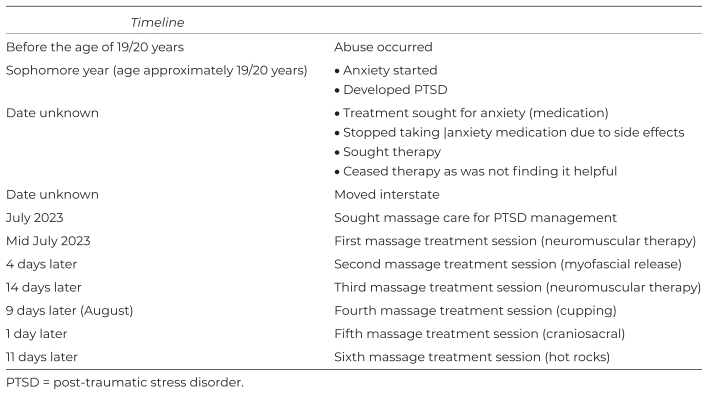
The client is a 25-year-old female who works in health education and integrative health care who self-referred to massage to help her manage the symptoms of PTSD. The client reported experiencing PTSD from domestic abuse she previously experienced. See Table 1 for a timeline of events. The domestic abuse has had long-lasting impacts on the client, and it affects her in many ways in her daily life. She experiences feelings of failure and feelings of not being good enough. While these symptoms are psychological, the client also has physical consequences from these thoughts; she frequently experiences nausea, tremors, and migraines. These symptoms can lead to a depressive episode which results in an overall lack of desire to do anything. She also experiences severe anxiety which can lead to panic attacks. A side-effect of the anxiety is significant bilateral tension in her shoulders.
Table 1 Timeline of Important Dates and Times Associated with the Case
This case report discusses the use of massage to help manage the client’s PTSD. Her chief symptoms over the course of the treatments were anxiety and other symptoms that varied over the course of the treatment sessions. Other symptoms included shortness of breath, pounding heart, nausea and abdominal discomfort, chills or hot flashes, sweating, jelly legs, dizziness, and numbness or tingling. The client utilizes hiking and off-roading as self-care tools to manage some of her symptoms. However, the effectiveness of these tools varies as they can cause more muscle soreness and fatigue. The client’s family has a history of psychiatric disorders. One parent experiences anxiety and at one time they were hospitalized believing their anxiety symptoms were symptoms of a heart attack. Her other parent was diagnosed with major depression when they were younger. Prior to the abuse, the client had not experienced signs of anxiety disorder. The client experienced her first major signs of anxiety as a sophomore in college. At that time she experienced her first panic attack and was taken to an urgent care where she was given anxiety medication. She experienced side effects from the medication and stopped taking them. She also tried going to therapy but did not find it helpful. Her symptoms got significantly better when she moved to a different state and spent more time outdoors. Although she has had a significant decrease in symptoms, she still experiences symptoms that interfere with her quality of life.
The client described having PTSD and anxiety. It was unknown if the client had received a formal assessment and diagnosis for either her PTSD or anxiety in the past. A formal Diagnostic and Statistical Manual of Mental Disorders (DSM) criterion diagnosis of PTSD and anxiety was not sought as this would not have changed the massage treatment.
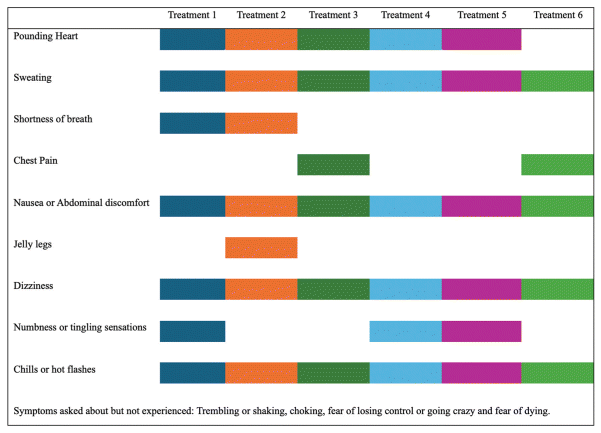
There were limited physical findings as PTSD is a psychological condition; however, palpation was used to find trigger points along the client’s scapula and to assess which muscles were hypertonic. The clinician researched the common side effects and/or symptoms of PTSD and created a checklist that she used to determine which symptoms the client was currently experiencing on the day of treatment (see Figure 1). A verbal assessment was conducted prior to each session to assess where the client felt the most tension and to see how she had felt after the previous session.
|
| ||
|
Figure 1 Symptom presentation at each treatment. | ||
Before every session the client completed the Generalized Anxiety Disorder scale (GAD-7)(16) which measures the severity of generalized anxiety. The GAD-7 is a standardized self-reported test assessing the severity and impact of generalized anxiety on everyday life. The test uses a 4-point Likert scal ranging from “not at all (0)” to “nearly every day (3).”(16) The total score ranges from 0 to 21 with scores of 5–9 representing mild anxiety, 10–14 moderate anxiety, and 15–21 representing severe anxiety.(16) The GAD-7 was on a handheld electronic device which was handed to the client at the beginning of every session and the client completed it on her own. The therapist did not review it until after the treatment. The first author’s checklist of symptoms was used as a self-reported outcome measure to track the frequency of PTSD symptoms (see Figure 1).
The sessions were conducted in a student clinic at a massage therapy school. The student clinic was supervised by an experienced massage therapist, who was available during the intervention if needed. Each treatment session was discussed with the supervisor allowing the student to ask questions and the instructor to share feedback about what worked well and suggestions for improvements. The clinic was a large room separated by curtains for multiple therapists to work in. During the sessions the client and the therapist were the only ones utilizing the room. The student clinic was sparsely furnished, and music was played during the sessions. The client did not really like spa music, so jazz and some rock music were played during the neuromuscular therapy (NMT) and myofascial sessions. The hot rocks session had a music from a playlist she had created, and craniosacral had regular spa music.
The treatments were provided by the first author who was a student massage therapist prior to her graduation. She was in the final 2 months of her 5-month massage therapy training. At the time of treatment, the therapist did not have previous experience working as a massage therapist. The first author had some interaction with individuals with mental health issues during her teens and early 20s and so was somewhat comfortable discussing mental health with kindness, empathy, and nonjudgment.
The techniques used for this case report were myofascial release, NMT, cupping, craniosacral, and hot rocks. These modalities were chosen as it was part of the first author’s student requirements. See Table 1 for list of timings that each modality was used. Craniosacral is a modality that is designed for the relaxation of the client and to facilitate the release of stored emotional trauma.(17) The focus of this modality, when used, was to facilitate the release of unneeded energy that the client was holding on to. Craniosacral therapy addresses the flow of cerebral spinal fluid. When this fluid is disrupted, it can negatively affect the sensory, motor, cognitive, and emotional processes in the central nervous system.(17) Because of the effects the cerebral spinal fluid can have on the emotional processes, it is postulated that the flow of the cerebral spinal fluid can decrease the effects of anxiety. Hot rocks are like Swedish massage in terms of the physiological effects that it can have on the client. The focus of this modality, when used, was to help facilitate chemical changes in the brain which may have a positive impact on the client’s anxiety. When myofascial release, NMT, and cupping were used, the therapist’s focus was to use massage to address the symptoms from the anxiety.(18)
The therapist (the first author) undertook research on common symptoms in PTSD and developed an assessment checklist tool to quantitatively assess PTSD symptomology in each session (see Figure 1). The first author used the following micro-skills to provide choice and voice to the client and to enhance a feeling of safety during the treatment sessions: the therapist checked in on the pressure being provided, listened to the client’s feedback, and adjusted pressure accordingly. The therapist endeavored to provide a space where the client could choose to be quiet if they wanted or talk. If the client did talk, then the therapist aimed to listen actively and without judgment. The therapist aimed to foster autonomy and safety by allowing the client to choose and change the music based on her preference and needs on the day. Time was allocated each session prior to the hands-on treatment to converse, including time to share how the PTSD had shown up for her between the sessions and on the day of the session to help strengthen the therapeutic alliance.
The therapy sessions were spaced out over several weeks (see Table 1). The client received six treatments which consisted of 60 min of treatment and 10 min of consultation time, totaling 70 min. The importance of ensuring the client felt safe never changed over the duration of the treatment. The frequency of the treatments was based on the schedule of the student clinic, and this could not be altered. This timing of the treatments does not reflect ideal clinical practice where treatment frequency may be more uniform or scheduled around PTSD symptomology. Informed consent was obtained verbally at each session.
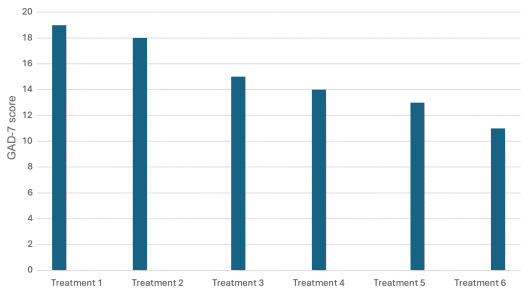
The client scored a total of 19 on GAD-7 at the first visit which is in the severe category.( 16) By the sixth session the client’s total GAD-7 score had decreased to 11 (total drop of 8) and was in the moderate anxiety category(16) (see Figure 2). It can be seen in Figure 2 that the GAD-7 scores decreased from the first treatment and continued to decrease over the course of the sessions implying a lasting and potentially cumulative effect.
|
| ||
|
Figure 2 GAD-7 (anxiety) scores over the treatment sessions. | ||
Minimal clinically important difference (MCID) is a measure used to determine the smallest change in a patient outcome measure that a client perceives as beneficial and meaningful and that leads to a change in the client’s management.(19–21) The reduction in the GAD-7 total score by 8 points and moving to a lower category (severe to moderate) for the individual in this case report meet the criteria for MCID for GAD-7.(22)
The client’s symptoms, based on the practitioner’s checklist, decreased over the course of her treatment from 7 out of 13 symptoms to 5 symptoms (see Figure 1). Some symptoms, however, did not change during the duration of the treatment, such as chills or hot flushes, dizziness, nausea/abdominal discomfort, or sweating. Shortness of breath abated after the second treatment and did not present again as a symptom. Other symptoms came and went over the course of the treatment sessions. There were four symptoms that were not experienced at any time during the massage treatment: trembling or shaking, choking, fear of losing control or going crazy, and fear of dying.
The client reported she had several emotional releases and experienced a state of relaxation that she was not able to achieve otherwise at times during the treatments. The client reported experiencing significant relaxation during this craniosacral treatment stating that she “felt more relaxed than she had in a while.” The client had a similar effect of feeling relaxed after hot rock treatment. The client reported that NMT, cupping, and myofascial release “had a significant impact on [her] physical symptoms related to her anxiety.” While these modalities helped decrease the client’s physical symptoms, she did not feel that she experienced as much of a decrease in anxiety after these treatments. The client also experienced some decrease in symptoms from a recent adductor injury.
The clinically significant change that was observed in this client who received massage adds to the current literature about the beneficial effects of massage for individuals experiencing anxiety.(23–32) It is important to note that decreases in anxiety in these research studies were often significant compared to no treatment or treatment as usual groups but not to active comparators such as relaxation therapy. This case study treatment focused on both the anxiety and physical symptoms of PTSD, and the effects of the treatments provided in regard to the anxiety appear to be cumulative, based on the GAD-7 data. The cumulative effect of treatment for anxiety may represent both the handson impact of massage techniques and the therapeutic relationship and rapport that was developed over the course of the sessions. This reinforces the concept that the massage consultation and treatment space need to be a safe place for clients to enter, where they “feel comfortable to share what they are feeling” (p. 51).(33)
In the client’s perception, the most relaxing massage techniques were craniosacral treatment and hot rocks treatment, and these two techniques were provided last. The GAD-7 scores show that anxiety decreased from the first treatment session and for each treatment session, and was clinically meaningful despite the client not feeling that the techniques used in the first four treatments were as “relaxing” as the latter two treatments. This highlights the balance required in clinical practice of providing a treatment that is both beneficial from an outcome measure and physiological point of view as well as being perceived by the client as helpful and addressing their area of concern. Future research on massage and PTSD could include a co-design research methodology to help identify important aspects of quality of care, treatment satisfaction, and outcome measures that are relevant to individuals experiencing PTSD.
A strength of this case study is that multiple massage techniques were used and are reflected in the case study findings. The therapists did not repeat the same treatment over and over to get the results and this has a potential clinical impact. The case report findings encourage therapists to use different techniques in practice without worrying that they will decrease the “effectiveness” of their treatment in individuals experiencing anxiety. Clinicians may worry, if a treatment with a certain massage technique is reported to be effective, that they cannot change techniques in future treatments because of the fear that the new techniques might be less effective.
This case report used a validated outcome measure (the GAD-7 for anxiety) which is a common outcome measure utilized in PTSD research. The use of the GAD-7 outcome tool provides the capacity for the assessment of clinically important change and increases the transferability of the case study findings. A limitation of the study was the inability of the therapist to choose when the appointments were provided. This impacted the GAD-7 findings in the following ways: the GAD-7 asks about a time period covering the last 2 weeks. Given the proximity of some of the treatments to each other, the 2-week period covered more than one treatment consultation in some cases meaning that it is not possible to isolate the individual effects of each massage treatment technique on anxiety. As there was no post-treatment follow-up after the last treatment, there were no data collected about the impact and/or effects of the hot rocks treatment other than feedback provided by the client at the time. A strength of the study treatment timings is that it demonstrates that the intervals between the treatments can be erratic but frequent which imitates real-world settings, and despite this, beneficial impacts can be achieved.
This case report is a snapshot of a “real-world” experience of a woman experiencing PTSD seeking massage care to help her address anxiety and other PTSD symptomology. The findings highlight a clinically important change for individuals experiencing anxiety as part of their PTSD, and research into the role of massage to support individuals experiencing anxiety as part of their PTSD presentation is needed.
Massage is a treatment option for individuals with anxiety and symptoms related to PTSD and different massage techniques, while all appearing to be helpful, should be utilized as per the client’s preference.
All persons listed as authors have participated sufficiently in the work to take public responsibility for the content, including participation in the design, analysis, writing, or revision of the manuscript. All authors (A. Hanus and S. Fogarty) contributed to the presentation of the work, author A. Hanus collected the data, all authors (A. Hanus and S. Fogarty) contributed to the data interpretation, and all authors (A. Hanus and S. Fogarty) drafted the article and critically revised the article.
Sarah Fogarty is a practicing massage therapist. Anna Hanus has no conflicts of interests to declare.
The authors received no financial support for the research, authorship, and/or publication of this article.
1. Tentama F, Mulasari SA, Sukesi T, Haryono W. The effectiveness of trauma healing methods to reduce post-traumatic stress disorder (PTSD) on teenage victims of Mount Merapi eruption. Int J Res Stud Psychol. 2014;3:101–111.
Crossref
2. American Psychiatric Association. Trauma- and stressor-related disorders. In: Diagnostic and Statistical Manual of Mental Disorders: DSM-5 [Internet]. Washington, DC: American Psychiatric Association; 2017:271–280.
3. Wahbeh H, Senders A, Neuendorf R, Cayton J. Complementary and alternative medicine for post-traumatic stress disorder symptoms: a systematic review. J Evid Based Complementary Altern Med. 2014;19(3):161–175.
Crossref PubMed PMC
4. Mann S, Marwaha R, Torrico T. Posttraumatic Stress Disorder [Internet]. Treasure Island, FL: StatPearls; 2024 [cited July 19, 2024]. Available from: https://www.ncbi.nlm.nih.gov/books/NBK559129/.
5. Kahn WA. The revelation of organizational trauma. J Appl Behav Sci. 2003;39(4):364–380.
Crossref
6. Sumpton B, Baskwill A. A series of case reports regarding the use of massage therapy to improve sleep quality in individuals with post-traumatic stress disorder (PTSD). Int J Ther Massage Bodyw. 2019;12(4):3–9.
7. Rosenow M, Munk N. Massage for combat injuries in veteran with undisclosed PTSD: a retrospective case report. Int J Ther Massage Bodyw. 2021;14(1):4–11.
8. Tarsha MS, Park S, Tortora S. Body-centered interventions for psychopathological conditions: a review. Front Psychol. 2019;10:2907.
Crossref
9. Taylor SL, Gelman HM, DeFaccio R, Douglas J, Hawrilenko MJ, McGinty NK, et al. We built it, but did they come: veterans’ use of VA healthcare system-provided complementary and integrative health approaches. J Gen Intern Med. 2023;38(4):905–912.
Crossref
10. Davis L, Hanson B, Gilliam S. Pilot study of the effects of mixed light touch manual therapies on active duty soldiers with chronic post-traumatic stress disorder and injury to the head. J Bodyw Mov Ther. 2016;20(1):42–51.
Crossref PubMed
11. Sliz D, Hayley S. Major depressive disorder and alterations in insular cortical activity: a review of current functional magnetic imaging research. Front Hum Neurosci. 2012;6:323.
Crossref PubMed PMC
12. Sliz D, Smith A, Wiebking C, Northoff G, Hayley S. Neural correlates of a single-session massage treatment. Brain Imaging Behav. 2012;6(1):77–87.
Crossref PubMed PMC
13. Rapaport MH, Schettler PJ, Larson ER, Carroll D, Sharenko M, Nettles J, et al. Massage therapy for psychiatric disorders. Focus. 2018;16(1):24–31.
Crossref PubMed PMC
14. Moraska A, Pollini RA, Boulanger K, Brooks MZ, Teitlebaum L. Physiological adjustments to stress measures following massage therapy: a review of the literature. Evid Based Complement Alternat Med. 2010;7(4):409–418.
Crossref PMC
15. Eggart M, Queri S, Müller-Oerlinghausen B. Are the antidepressive effects of massage therapy mediated by restoration of impaired interoceptive functioning? A novel hypothetical mechanism. Med Hypotheses. 2019;128:28–32.
Crossref PubMed
16. Spitzer RL, Kroenke K, Williams JB, Löwe B. A brief measure for assessing generalized anxiety disorder: the GAD-7. Arch Intern Med. 2006;166(10):1092–1097.
Crossref PubMed
17. Stub T, Kiil MA, Lie B, Kristoffersen AE, Weiss T, Hervik JB, et al. Combining psychotherapy with craniosacral therapy for severe traumatized patients: a qualitative study from an outpatient clinic in Norway. Complement Ther Med. 2020;49:102320.
Crossref PubMed
18. Sherman KJ, Ludman EJ, Cook AJ, Hawkes RJ, Roy-Byrne PP, Bentley S, et al. Effectiveness of therapeutic massage for generalized anxiety disorder: a randomized controlled trial. Depress Anxiety. 2010;27(5):441–450.
Crossref PubMed PMC
19. Franceschini M, Boffa A, Pignotti E, Andriolo L, Zaffagnini S, Filardo G. The minimal clinically important difference changes greatly based on the different calculation methods. Am J Sports Med. 2023;51(4):1067–1073.
Crossref PubMed PMC
20. Jaeschke R, Singer J, Guyatt GH. Measurement of health status. Ascertaining the minimal clinically important difference. Control Clin Trials. 1989;10(4):407–415.
Crossref PubMed
21. Mishra B, Sudheer P, Agarwal A, Srivastava MVP, Nilima, Vishnu VY. Minimal clinically important difference (MCID) in patient-reported outcome measures for neurological conditions: review of concept and methods. Ann Indian Acad Neurol. 2023;26(4):334–343.
Crossref PubMed PMC
22. Toussaint A, Hüsing P, Gumz A, Wingenfeld K, Härter M, Schramm E, et al. Sensitivity to change and minimal clinically important difference of the 7-item Generalized Anxiety Disorder Questionnaire (GAD-7). J Affect Disord. 2020;265:395–401.
Crossref PubMed
23. Smith CA, Shewamene Z, Galbally M, Schmied V, Dahlen H. The effect of complementary medicines and therapies on maternal anxiety and depression in pregnancy: a systematic review and meta-analysis. J Affect Disord. 2019;245:428–439.
Crossref
24. Rodríguez-Mansilla J, González-Sánchez B, Torres-Piles S, Martín JG, Jiménez-Palomares M, Bellino MN. Effects of the application of therapeutic massage in children with cancer: a systematic review. Rev Lat Am Enfermagem. 2017;25:e2903.
Crossref PubMed PMC
25. Boyd C, Crawford C, Paat CF, Price A, Xenakis L, Zhang W. The impact of massage therapy on function in pain populations-a systematic review and meta-analysis of randomized controlled trials: part II, cancer pain populations. Pain Med. 2016;17(8):1553–1568.
Crossref PubMed PMC
26. Akköz Çevik S, Karaduman S. The effect of sacral massage on labor pain and anxiety: a randomized controlled trial. Jpn J Nurs Sci. 2020;17(1): e12272.
Crossref
27. Rapaport MH, Schettler P, Larson ER, Edwards SA, Dunlop BW, Rakofsky JJ, et al. Acute Swedish massage monotherapy successfully remediates symptoms of generalized anxiety disorder: a proof-of-concept, randomized controlled study. J Clin Psychiatry. 2016;77(7):e883–e891.
Crossref PubMed PMC
28. Grafton-Clarke C, Grace L, Roberts N, Harky A. Can postoperative massage therapy reduce pain and anxiety in cardiac surgery patients? Interact Cardiovasc Thorac Surg. 2019;28(5):716–721.
Crossref
29. Li Z, Bauer B, Aaberg M, Pool S, Van Rooy K, Schroeder D, et al. Benefits of hand massage on anxiety in preoperative outpatient: a quasi-experimental study with pre- and post-tests. Explore (NY). 2021;17(5):410–416.
Crossref
30. Hsu WC, Guo SE, Chang CH. Back massage intervention for improving health and sleep quality among intensive care unit patients. Nurs Crit Care. 2019;24(5):313–319.
Crossref PubMed
31. Najafi Ghezeljeh T, Mohades Ardebili F, Rafii F. The effects of massage and music on pain, anxiety and relaxation in burn patients: randomized controlled clinical trial. Burns. 2017;43(5):1034–1043.
Crossref PubMed
32. Wilczyńska D, Łysak-Radomska A, Podczarska-Głowacka M, Zajt J, Dornowski M, Skonieczny P. Evaluation of the effectiveness of relaxation in lowering the level of anxiety in young adults–a pilot study. Int J Occup Med Environ Health. 2019;32(6):817–824.
Crossref
33. Fogarty S. The use of massage to support emotional and physical health in a pregnancy after stillbirth: a case study. Int J Ther Massage Bodyw. 2022;15(1):46–53.
Corresponding author: Anna Hanus, 1801 Pony Soldier Rd, Prescott, AZ 86303, USA, E-mail: wetarhanus@aol.com, Tel: +1-928-925-3970
COPYRIGHT
Published under the CreativeCommons Attribution-NonCommercial-NoDerivs 3.0 License.
International Journal of Therapeutic Massage and Bodywork, Volume 18, Number 3, September 2025