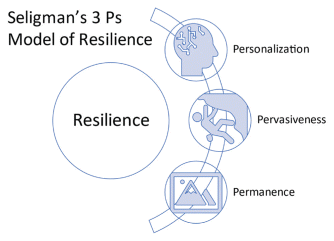
Figure 1 Seligman’s three Ps model of resilience—personalization, pervasiveness, and permanence (Adapted from Seligman(32)).
Jill S. Cole, MA, LMT, BCTMB,1,2* Esther E. Dupont-Versteegden, PhD,2,3,4 Christen G. Page, PhD, CCC-SLP,5 University of Kentucky Rehabilitation and Health Sciences PhD Program
1University of Kentucky HealthCare Integrative Medicine and Health, Lexington, KY, USA,
2Rehabilitation and Health Sciences, University of Kentucky College of Health Sciences, Lexington, KY, USA,
3Department of Physical Therapy, University of Kentucky College of Health Sciences, Lexington, KY, USA,
4Center for Muscle Biology, University of Kentucky College of Health Sciences, Lexington, KY, USA,
5Department of Communication Sciences and Disorders, University of Kentucky College of Health Sciences, Lexington, KY, USA
Pain and anxiety affect nearly half of patients with cancer, and high symptom burden causes stress during treatment. Both massage therapy and interventions focused on resilience building have been reported to ease symptoms. Resilience theory explains how a patient’s resilience can help them navigate stressful events and return to health. Resilience at the family and health system level also affects a patient’s ability to cope, recover, and rehabilitate after illness. Massage therapy is reported to reduce pain and anxiety, but its effect on resilience has not been studied. The purpose of this paper is to propose resilience theory as a framework for the role of massage therapy, symptom burden, and resilience, and how these might interact in patients with cancer.
KEYWORDS: Resilience theory; massage therapy; cancer; pain; anxiety
Roughly 50% of patients with cancer, undergoing or recovering from treatment, experience high symptom burdens of stress, pain, anxiety, and, therefore, a lower quality of life.(1–4) These high symptom burdens often go untreated and un- or misdiagnosed.(5,6) When pain is involved in patients with cancer, opioids are the dominant treatment of choice, despite the risk of dependency and the known complications of polypharmacy that are common in cancer survivors.(7–11) Similar to pain, anxiety is another symptom burden in patients with cancer that can benefit from a holistic approach.(12,13) Therefore, non-pharmacological approaches need to be considered for symptom management in patients with cancer.
Massage therapy serves as a viable and effective non-pharmacological treatment of pain and anxiety in patients with cancer.(14,15) Specialty training in oncology massage therapy (OMT) and hospital-based massage therapy (HBMT) is desirable when working with patients with cancer. Proper training and use of appropriate massage therapy techniques for patients with cancer are vital to the safe delivery of massage therapy and to achieve prime outcomes of change in pain, stress, and anxiety. OMT can take place in a clinic, spa, or private practice setting and uses the appropriate pressure, site, and positioning adjustments for the patient, in relation to their treatment. OMT addresses the side effects of cancer treatment, such as fatigue, nausea, and pain, and supports health in recovery from illness.(16–18) HBMT uses similar competencies as OMT and expands its application to inpatient and outpatient settings. HBMT focuses on patient-centered care while working with an interdisciplinary health-care team.(19)
In kind, resilience theory addresses high symptom burdens of pain, anxiety, and stress that patients with cancer often experience.(20) Resilience has been described as the ability to adapt and move through rapid changes and hardships in life while embracing the suffering with a positive perspective.(21) Recent studies determined that resilience is multidimensional and can be taught, learned, and adapted to less-than-ideal circumstances.(22) This is especially true in patients with cancer. Resilience serves as a powerful tool in coping with an unimaginable diagnosis, prognosis, treatment outcomes, and stress associated with the disease.(23–25)
Both massage therapy and resilience have a positive impact on patients with cancer. Each address pain levels, degrees of anxiety, stress intensity, and quality of life concerns that patients with cancer experience.(12,26–28) As a stand-alone approach, a patient with cancer can benefit from massage therapy’s evidence-based interventions. The same can be said for resilience. There is not a current framework that covers both massage therapy and resilience, and this paper attempts to study how massage therapy might influence the practice of resilience a patient with cancer could implement in their treatment. Currently, theories are limited in the field of massage therapy. This paper will therefore introduce a new theoretical model that invites research answering how massage therapy influences, strengthens, and supports patient resilience in cancer care. We propose that massage therapy, by improving cancer symptoms and stress, can also improve personal resilience. This improvement, in turn, further improves pain, anxiety, and stress, creating a positive feedback loop. Improvement in resilience also enhances quality of life, quality of care, and recovery from treatment. This explanation supports the use of resilience theory in research on massage therapy and cancer. By extension, the use of validated resilience measurements is warranted in research on massage therapy and cancer.
We first explore the framework of resilience theory and its implications for understanding symptom management of patients with cancer. Within the resilience framework, examination of personal resilience effects on pain, anxiety, quality of life, quality of care, and recovery of treatment of patients with cancer will be discussed. Additionally, the effectiveness of massage therapy on symptom management in patients with cancer will be reviewed. We will then propose one theoretical model for the interaction of massage therapy and resilience theory in relieving high symptom burden of patients with cancer. Our objective is to propose a model of resilience theory and massage therapy that will be the scaffolding of future research hypotheses to help patients with cancer deal with diagnosis, illness, and recovery. We hope that this theory and future research potential will also lead to an increase of positive tools that patients with cancer can use to navigate their journey.
The concept of resilience has a rich foundation in research within an organizational, educational, health-care, personal, and workforce perspective across genders and ages.(29) Perhaps the most common definition of resilience is a person’s ability to “bounce back” after a stressful or traumatic event, to show agility in the face of hardship, and to recover to a homeostasis of health.(30,31) Seligman’s model of the three Ps of resilience—personalization, pervasiveness, and permanence(32)—serves as the foundation in constructing the concepts of resilience in this paper (Figure 1). It is important to understand the mechanism and background of resilience theory as well as massage therapy’s influence on resilience related to our framework. Emerging data reveal that resilience can be taught, learned, and adapted cognitively, psychologically, and emotionally.(33) This is especially important for patients with cancer, as the practice of resilience can positively impact high symptom burden.(34) The patient with cancer can learn the skills of resilience to cope with their illness. Seligman’s model has been adapted for use in other populations, such as military service people, to address the increased risk of mental illness following active duty/combat.(35) Positive or holistic psychology is another Seligman’s model that has been used in education and organizations, both public and private, to build community, collaboration, and a sense of resilience.(36)
|
| ||
|
Figure 1 Seligman’s three Ps model of resilience—personalization, pervasiveness, and permanence (Adapted from Seligman(32)). | ||
All three levels of the Seligman’s three Ps model of resilience relate to resilience of the patient. First, personalization of blame (e.g., somehow, it is the patient’s fault that they received a cancer diagnosis), seen in patients with cancer, can also be evident.(37) Second, pessimism from pervasiveness (e.g., unrelenting feelings of hopelessness) transmits to the patient.(38,39) Finally, within permanence, depression (e.g., unrelenting feelings of sadness, anxiety, fatigue, and aggravation) can also be found across the resilience of the patient.(40)
Patient resilience and stress are interrelated, and stress is the most common symptom reported by patients with cancer, from the initial diagnosis to treatment and into recovery.(41) Stress and resilience are related in this way; stress manifests and builds through the financial pressures of treatment, missing or losing work, and reduced income for themselves and their families. Physical, emotional, mental, and spiritual stress are also evident in patients with cancer and contribute to pain, anxiety, challenges to quality of life, and recovery from treatment.(42–44) Therefore, the ability to manage stress is essential to the health of the patient with cancer.(45) Whether a patient with cancer had a high level of personal resilience before diagnosis or not,(46,47) they possess the ability to recognize, learn, and expand a sense of personal resilience and thereby decrease their stress levels.(48,49)
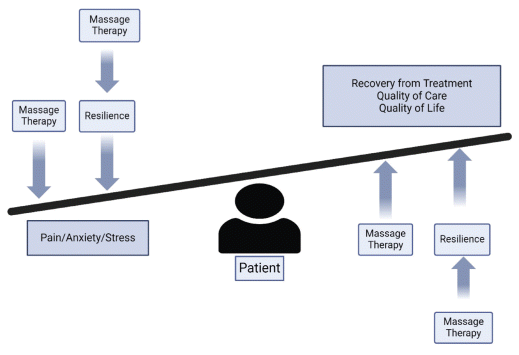
Patients with cancer experience challenging side effects of treatment, multi-faceted stress, pain, anxiety, and quality of life concerns.(50–53) The healing process and the path to homeostasis for patients with cancer before, during, and after treatment can be viewed through the lens of the Seligman’s three Ps model of resilience approach. Massage therapy is an intervention that reinforces recovery from illness and addresses a multitude of side effects that enable the patient’s ability to recuperate.(27,54,55) To demonstrate the impact of massage therapy as a facilitator of resilience, we present a model of massage therapy intervention and research to influence personal resilience.(56–59) The model includes components of resilience theory and massage therapy that have similar impacts on symptom management in patients with cancer (Figure 2).
|
| ||
|
Figure 2 A model representing the effects of massage therapy on the resilience of patients with cancer. | ||
In the model, we propose that resilience of the patient with cancer increases as massage therapy is applied to reduce the pain, anxiety, and stress. According to the model, as the patient’s resilience increases, so do their health outcomes of pain, anxiety, quality of life, quality of care, and recovery from care (Figure 2). In the model (Figure 2), the patient is placed in the center (black figure in the middle). Massage therapy decreases pain, anxiety, and stress of patients with cancer (downward arrow), while resilience has a positive impact on medical outcomes of recovery from care, quality of care, and quality of life (upward arrow). As massage therapy affects pain, anxiety, and stress of patients with cancer as well as caregivers, resilience increases, thereby increasing positive medical outcomes of quality of life, quality of care, and recovery from care in patients with cancer. Resilience and massage therapy combined can reduce high symptom burdens of stress, pain, and anxiety in patients with cancer. Massage therapy provides support and stress relief from a cancer diagnosis for the patient. When the stress of the patient is addressed through massage therapy, the level of pain and anxiety lessens. Therefore, massage provided to the patients themselves may create a more resilient environment that improves the health and well-being of the patient (Figure 2). We propose that our model provides a good starting point to form hypotheses to research the effect of massage therapy on resilience at multiple levels.
The proposed model, combining massage therapy and resilience theory, unites two vastly different, yet effective, styles of support for patients with cancer. This novel model intersects with the Whole Person Health model, which includes patient-centered care while also considering all factors of health, not just the disease.(60) By looking at massage therapy through the resilience theory framework, clinicians have the opportunity to engage with other health disciplines applying similar strategies and provide tools for the patient to move forward with more support during their illness.
As a theory, massage therapy’s impact on personal resilience can best be measured through the application of validated resilience measurement systems. Personal resilience measurements such as the 10-item and 25-item versions of the Connor-Davidson Resilience Scale are important to use in determining the baseline, pretest, and posttest multi-faceted resilience.(61–63) No current validated resilience measure is a completely good fit with massage therapy. Thus, there is a need to adapt a short form of these scales reflecting a resilience- and massage therapy–specific tool. For a future research project, adapting a short form of these scales might be indicated for more specific measures, as many of the scales include factors that are unlikely to be affected by even the most skillfully administered massage therapy. The clinician can use validated resilience measurement tools pre-post massage therapy intervention to capture any changes. These changes would capture both the massage effects and other factors such as effects of time resting from not having to parent a child. Multiple resilience measures could be used over time, alongside other biopsychosocial factors, to help guide what frequency of massage therapy intervention is the best for each patient.(64) Championing the resiliency of patients with cancer is a multi-faceted approach of communication, measurement, and application (Table 1).
Table 1 Characteristics of Resilience and Massage Therapy in Patients with Cancer
The proposed model of massage therapy as an influencer of resilience for patients with cancer is not without limitations. It has long been debated whether resilience is inherent or learned or both.(30) Some resilience theories have purported that an individual is either born with a propensity for resilience or not,(65) while others argue that resilience is an interpersonal tool that can be taught and strengthened over time.(66) To our knowledge, the impact of massage therapy and resilience on pain and anxiety in patients with cancer has not been explored, and no theories addressing this issue exist. While patients with cancer showing resiliency upon initial diagnosis experience better quality of life and health outcomes, patients showing little to no resiliency need access to tools to develop their ability to bounce back. Learning the psychosocial skills needed to cope with the hardships associated with diagnosis, treatment, and recovery is vital to the health outcomes of patients with cancer.(67,68) Therefore, massage therapy could be one option for improving resilience in patients with cancer. More research is needed to explore the relationship between massage therapy and resilience and what effects and benefits this might have, not only on resilience levels but also on other aspects of health and well-being. Future investigations driven by our model will determine the effects of massage therapy on resilience.
Theoretical models of massage therapy are few and far between. Bridging the gap between rehabilitative science theories and massage therapy will increase awareness of massage therapy benefits. A fuller understanding of the role of resilience in the effects of massage may support it as a psychosocial as well as physical intervention in patients with cancer. Just as tissues become more pliable with massage, so does the ability to become resilient. The high symptom burdens that patients with cancer often experience affects their ability to bounce back and recover from illness. This proposed model of resilience theory and massage therapy provides a framework for the generation of research hypotheses to investigate and explain massage therapy. In turn, patients may become more resilient, better equipped to cope with illness and recovery, and able to move forward beyond cancer treatment.
The authors, Jill Cole, Esther Dupont-Versteegden, and Christen Page certify that they have NO affiliations with or involvement in any organization or entity with any financial interest (such as honoraria; educational grants; participation in speakers’ bureaus; membership, employment, consultancies, stock ownership, or other equity interest; and expert testimony or patent-licensing arrangements) or non-financial interest (such as personal or professional relationships, affiliations, knowledge or beliefs) in the subject matter or materials discussed in this manuscript.
No sources of funding were used in this study.
1. Wang K, Yee C, Tam S, Drost L, Chan S, Zaki P, et al. Prevalence of pain in patients with breast cancer post-treatment: a systematic review. Breast. 2018;42:113–127. https://doi.org/10.1016/j.breast.2018.08.105
Crossref PubMed
2. Hashemi SM, Rafiemanesh H, Aghamohammadi T, Badakhsh M, Amirshahi M, Sari M, et al. Prevalence of anxiety among breast cancer patients: a systematic review and meta-analysis. Breast Cancer. 2020;27(2):166–178. https://doi.org/10.1007/s12282-019-01031-9
Crossref
3. Lee SH, Kim JY, Yeo S, Kim SH, Lim S. Meta-analysis of massage therapy on cancer pain. Integr Cancer Ther. 2015;14(4):297–304. https://doi.org/10.1177/1534735415572885
Crossref PubMed
4. Villar RR, Fernández SP, Garea CC, Pillado MTS, Barreiro VB, Martín CG. Quality of life and anxiety in women with breast cancer before and after treatment. Rev Lat Am Enfermagem. 2017;25:e2958. https://doi.org/10.1590/1518-8345.2258.2958
Crossref PubMed PMC
5. Khan JS, Ladha KS, Abdallah F, Clarke H. Treating persistent pain after breast cancer surgery. Drugs. 2020;80(1):23–31. https://doi.org/10.1007/s40265-019-01227-5
Crossref
6. Carreira H, Williams R, Müller M, Harewood R, Stanway S, Bhaskaran K. Associations between breast cancer survivorship and adverse mental health outcomes: a systematic review. J Natl Cancer Inst. 2018;110(12):1311–1327. https://doi.org/10.1093/jnci/djy177
Crossref PubMed PMC
7. Madden K, Haider A, Rozman De Moraes A, Naqvi SM, Enriquez PA, Wu J, et al. Frequency of concomitant use of gabapentinoids and opioids among patients with cancer-related pain at an outpatient palliative care clinic. J Palliat Med. 2021;24(1):91–96. https://doi.org/10.1089/jpm.2019.0614
Crossref
8. Chan CWH, Tai D, Kwong S, Chow KM, Chan DNS, Law BMH. The effects of pharmacological and non-pharmacological interventions on symptom management and quality of life among breast cancer survivors undergoing adjuvant endocrine therapy: a systematic review. Int J Environ Res Public Health. 2020;17(8):2950. https://doi.org/10.3390/ijerph17082950
Crossref PubMed PMC
9. Tian F, Chen Z, Zhou D, Mo L. Prevalence of polypharmacy and potentially inappropriate medication use in older lung cancer patients: a systematic review and meta-analysis. Front Pharmacol. 2022;13:1044885. https://doi.org/10.3389/fphar.2022.1044885
Crossref PMC
10. Alwhaibi M, AlRuthia Y, Alhawassi TM, Almalag H, Alsalloum H, Balkhi B. Polypharmacy and comorbidities among ambulatory cancer patients: a cross-sectional retrospective study. J Oncol Pharm Pract. 2020;26(5):1052–1059. https://doi.org/10.1177/1078155219880255
Crossref
11. Murphy CC, Fullington HM, Alvarez CA, Betts AC, Lee SJC, Haggstrom DA, et al. Polypharmacy and patterns of prescription medication use among cancer survivors. Cancer. 2018;124(13):2850–2857. https://doi.org/10.1002/cncr.31389
Crossref PubMed PMC
12. Carlson LE, Ismaila N, Addington EL, Asher GN, Atreya C, Balneaves LG, et al. Integrative oncology care of symptoms of anxiety and depression in adults with cancer: Society for Integrative Oncology–ASCO guideline. J Clin Oncol. 2023;41(28):4562–4591. https://doi.org/10.1200/jco.23.00857
Crossref PubMed
13. Chayadi E, Baes N, Kiropoulos L. The effects of mindfulness-based interventions on symptoms of depression, anxiety, and cancer-related fatigue in oncology patients: a systematic review and meta-analysis. PLoS One. 2022;17(7):e0269519. https://doi.org/10.1371/journal.pone.0269519
Crossref PubMed PMC
14. Miake-Lye IM, Mak S, Lee J, Luger T, Taylor SL, Shanman R, et al. Massage for pain: an evidence map. J Altern Complement Med. 2019;25(5):475–502. https://doi.org/10.1089/acm.2018.0282
Crossref PubMed PMC
15. Sturgeon JA, Zautra AJ. Resilience: a new paradigm for adaptation to chronic pain. Curr Pain Headache Rep. 2010;14(2):105–112. https://doi.org/10.1007/s11916-010-0095-9
Crossref PubMed PMC
16. Collinge W, MacDonald G, Walton T. Massage in supportive cancer care. Semin Oncol Nurs. 2012;28(1):45–54. https://doi.org/10.1016/j.soncn.2011.11.005
Crossref PubMed
17. MacDonald G. Massage therapy in cancer care: an overview of the past, present, and future. Altern Ther Health Med. 2014;20(suppl 2):12–15.
PubMed
18. Cole JS, Olson AD, Dupont-Versteegden EE. The effects of massage therapy in decreasing pain and anxiety in post-surgical patients with breast cancer: a systematic review and meta-analysis. Glob Adv Integr Med Health. 2024;13:27536130241245099. https://doi.org/10.1177/27536130241245099
Crossref PubMed PMC
19. Brennan MK, Healey D, Tague C, Rosenthal B. Hospital based massage therapy specific competencies. J Bodyw Mov Ther. 2019;23(2):291–294. https://doi.org/10.1016/j.jbmt.2019.01.009
Crossref PubMed
20. Hassett AL, Finan PH. The role of resilience in the clinical management of chronic pain. Curr Pain Headache Rep. 2016;20(6):39. https://doi.org/10.1007/s11916-016-0567-7
Crossref PubMed
21. Sturgeon JA, Zautra AJ. Psychological resilience, pain catastrophizing, and positive emotions: perspectives on comprehensive modeling of individual pain adaptation. Curr Pain Headache Rep. 2013;17(3):317. https://doi.org/10.1007/s11916-012-0317-4
Crossref PubMed PMC
22. Miller-Graff LE. The multidimensional taxonomy of individual resilience. Trauma Violence Abuse. 2022;23(2):660–675. https://doi.org/10.1177/1524838020967329
Crossref PMC
23. Harms CA, Cohen L, Pooley JA, Chambers SK, Galvão DA, Newton RU. Quality of life and psychological distress in cancer survivors: the role of psycho-social resources for resilience. Psychooncology. 2019;28(2):271–277. https://doi.org/10.1002/pon.4934
Crossref
24. Métais C, Burel N, Gillham JE, Tarquinio C, Martin-Krumm C. Integrative review of the recent literature on human resilience: from concepts, theories, and discussions towards a complex understanding. Eur J Psychol. 2022;18(1):98–119. https://doi.org/10.5964/ejop.2251
Crossref PubMed PMC
25. Wang X, Wang S, Yang D, Chu Y, Hao Y, Dai H. Associations among resilience, hope, social support, stress, and anxiety severity in Chinese women with abnormal cervical cancer screening results. Heliyon. 2022;8(12):e12539. https://doi.org/10.1016/j.heliyon.2022.e12539
Crossref
26. Opsomer S, Lauwerier E, De Lepeleire J, Pype P. Resilience in advanced cancer caregiving. A systematic review and meta-synthesis. Palliat Med. 2022;36(1):44–58. https://doi.org/10.1177/02692163211057749
Crossref PubMed PMC
27. Goubert L, Trompetter H. Towards a science and practice of resilience in the face of pain. Eur J Pain. 2017;21(8):1301–1315. https://doi.org/10.1002/ejp.1062
Crossref PubMed
28. Toth M, Marcantonio ER, Davis RB, Walton T, Kahn JR, Phillips RS. Massage therapy for patients with metastatic cancer: a pilot randomized controlled trial. J Altern Complement Med. 2013;19(7):650–656. https://doi.org/10.1089/acm.2012.0466
Crossref PubMed PMC
29. Borucka A, Ostaszewski K. Koncepcja resilience. Kluczowe pojecia i wybrane zagadnienia [Theory of resilience. Key conceptual constructs and chosen issues]. Med Wieku Rozwoj. 2008;12(2 pt 1):587–597.
30. Babić R, Babić M, Rastović P, Ćurlin M, Šimić J, Mandić K, et al. Resilience in health and illness. Psychiatr Danub. 2020;32(suppl 2):226–232.
31. Aburn G, Gott M, Hoare K. What is resilience? An integrative review of the empirical literature. J Adv Nurs. 2016;72(5):980–1000. https://doi.org/10.1111/jan.12888
Crossref PubMed
32. Seligman MEP. Positive psychology: a personal history. Annu Rev Clin Psychol. 2019;15:1–23. https://doi.org/10.1146/annurev-clinpsy-050718-095653
Crossref
33. Campbell-Enns H, Woodgate R. The psychosocial experiences of women with breast cancer across the lifespan: a systematic review protocol. JBI Database System Rev Implement Rep. 2015;13(1):112–121. https://doi.org/10.11124/jbisrir-2015-1795
Crossref PubMed
34. Cervera-Torres S, Ruiz-Fernández S, Godbersen H, Massó L, Martínez-Rubio D, Pintado-Cucarella S, et al. Influence of resilience and optimism on distress and intention to self-isolate: contrasting lower and higher COVID-19 illness risk samples from an extended health belief model. Front Psychol. 2021;12:662395. https://doi.org/10.3389/fpsyg.2021.662395
Crossref PubMed PMC
35. McInerney SA, Waldrep E, Benight CC. Resilience enhancing programs in the U.S. military: an exploration of theory and applied practice. Mil Psychol. 2024;36(3):241–252. https://doi.org/10.1080/08995605.2022.2086418
Crossref PubMed PMC
36. Phan HP, Ngu BH, White MO. Introducing ‘holistic psychology’ for life qualities: a theoretical model for consideration. Heliyon. 2021;7(1):e05843. https://doi.org/10.1016/j.heliyon.2020.e05843
Crossref PubMed PMC
37. Ozdemir S, Ng S, Chaudhry I, Teo I, Malhotra C, Finkelstein EA. Caregiver-reported roles in treatment decision making in advanced cancer and associated caregiving burden and psychological distress: a longitudinal study. Med Decis Making. 2023;43(2):191–202. https://doi.org/10.1177/0272989x221125408
Crossref
38. Pössel P, Mitchell AM, Harbison B, Fernandez-Botran GR. Repetitive negative thinking, depressive symptoms, and cortisol in cancer caregivers and noncaregivers. Oncol Nurs Forum. 2019;46(6):E202–E210. https://doi.org/10.1188/19.Onf.E202-e210
Crossref PubMed
39. Forsgren L, Tediosi F, Blanchet K, Saulnier DD. Health systems resilience in practice: a scoping review to identify strategies for building resilience. BMC Health Serv Res. 2022;22(1):1173. https://doi.org/10.1186/s12913-022-08544-8
Crossref PubMed PMC
40. Shimizu Y, Hayashi A, Maeda I, Miura T, Inoue A, Takano M, et al. Changes in depressive symptoms among family caregivers of patients with cancer after bereavement and their association with resilience: a prospective cohort study. Psychooncology. 2022;31(1):86–97. https://doi.org/10.1002/pon.5783
Crossref PMC
41. Langford DJ, Eaton L, Kober KM, Paul SM, Cooper BA, Hammer MJ, et al. A high stress profile is associated with severe pain in oncology patients receiving chemotherapy. Eur J Oncol Nurs. 2022;58:102135. https://doi.org/10.1016/j.ejon.2022.102135
Crossref PubMed
42. Belcher SM, Lee H, Nguyen J, Curseen K, Lal A, Zarrabi AJ, et al. Financial hardship and quality of life among patients with advanced cancer receiving outpatient palliative care: a pilot study. Cancer Nurs. 2023;46(1):3–13. https://doi.org/10.1097/ncc.0000000000001052
Crossref
43. Forcino R, Lichtenstein J, Rotenberg S, Godzik C, Schiffelbein J, Morrissette K, et al. Work- and school-related distress among patients with cancer: single-site retrospective chart review. J Psychosoc Oncol. 2023;41(2):242–249. https://doi.org/10.1080/07347332.2022.2090886
Crossref PMC
44. Guan T, Santacroce SJ, Chen DG, Song L. Illness uncertainty, coping, and quality of life among patients with prostate cancer. Psychooncology. 2020;29(6):1019–1025. https://doi.org/10.1002/pon.5372
Crossref PubMed PMC
45. Jakovljevic K, Kober KM, Block A, Cooper BA, Paul SM, Hammer MJ, et al. Higher levels of stress are associated with a significant symptom burden in oncology outpatients receiving chemotherapy. J Pain Symptom Manage. 2021;61(1):24–31.e4. https://doi.org/10.1016/j.jpainsymman.2020.07.019
Crossref
46. Ong AD, Leger KA. Advancing the study of resilience to daily stressors. Perspect Psychol Sci. 2022;17(6):1591–1603. https://doi.org/10.1177/17456916211071092
Crossref PubMed PMC
47. Wong P, Liamputtong P, Koch S, Rawson H. Searching for meaning: a grounded theory of family resilience in adult ICU. J Clin Nurs. 2019;28(5–6):781–791. https://doi.org/10.1111/jocn.14673
Crossref
48. Gan Y, Zheng L, Wang Y, Li W. An extension of the meaning making model using data from Chinese cancer patients: the moderating effect of resilience. Psychol Trauma. 2018;10(5):594–601. https://doi.org/10.1037/tra0000325
Crossref
49. Perry R, Sciolla A, Rea M, Sandholdt C, Jandrey K, Rice E, et al. Modeling the social determinants of resilience in health professions students: impact on psychological adjustment. Adv Health Sci Educ Theory Pract. 2023;28(5):1661–1677. https://doi.org/10.1007/s10459-023-10222-1
Crossref PubMed PMC
50. Lam WW, Yoon SW, Sze WK, Ng AW, Soong I, Kwong A, et al. Comparing the meanings of living with advanced breast cancer between women resilient to distress and women with persistent distress: a qualitative study. Psychooncology. 2017;26(2):255–261. https://doi.org/10.1002/pon.4116
Crossref
51. He Y, Pang Y, Su Z, Zhou Y, Wang Y, Lu Y, et al. Symptom burden, psychological distress, and symptom management status in hospitalized patients with advanced cancer: a multicenter study in China. ESMO Open. 2022;7(6):100595. https://doi.org/10.1016/j.esmoop.2022.100595
Crossref PubMed PMC
52. Morrison EJ, Novotny PJ, Sloan JA, Yang P, Patten CA, Ruddy KJ, et al. Emotional problems, quality of life, and symptom burden in patients with lung cancer. Clin Lung Cancer. 2017;18(5):497–503. https://doi.org/10.1016/j.cllc.2017.02.008
Crossref PubMed PMC
53. Cuthbert CA, Boyne DJ, Yuan X, Hemmelgarn BR, Cheung WY. Patient-reported symptom burden and supportive care needs at cancer diagnosis: a retrospective cohort study. Support Care Cancer. 2020;28(12):5889–5899. https://doi.org/10.1007/s00520-020-05415-y
Crossref PubMed
54. Yao C, Cheng Y, Zhu Q, Lv Z, Kong L, Fang M. Clinical evidence for the effects of manual therapy on cancer pain: a systematic review and meta-analysis. Evid Based Complement Alternat Med. 2021;2021:6678184. https://doi.org/10.1155/2021/6678184
Crossref PubMed PMC
55. Jin Y, Bhattarai M, Kuo WC, Bratzke LC. Relationship between resilience and self-care in people with chronic conditions: a systematic review and meta-analysis. J Clin Nurs. 2023;32(9–10):2041–2055. https://doi.org/10.1111/jocn.16258
Crossref
56. Katta MR, Valisekka SS, Agarwal P, Hameed M, Shivam S, Kaur J, et al. Non-pharmacological integrative therapies for chronic cancer pain. J Oncol Pharm Pract. 2022;28(8):1859–1868. https://doi.org/10.1177/10781552221098437
Crossref PubMed
57. Oei SL, Thronicke A, Matthes H, Schad F. Evaluation of the effects of integrative non-pharmacological interventions on the internal coherence and resilience of breast cancer patients. Support Care Cancer. 2021;29(3):1413–1421. https://doi.org/10.1007/s00520-020-05617-4
Crossref
58. Mao JJ, Ismaila N, Bao T, Barton D, Ben-Arye E, Garland EL, et al. Integrative medicine for pain management in oncology: Society for Integrative Oncology–ASCO guideline. J Clin Oncol. 2022;40(34):3998–4024. https://doi.org/10.1200/jco.22.01357
Crossref PubMed
59. Qin S, Xiao Y, Chi Z, Zhu D, Cheng P, Yu T, et al. Effectiveness and safety of massage in the treatment of anxiety and depression in patients with cancer: a protocol for systematic review and meta-analysis. Medicine (Baltimore). 2020;99(39):e22262. https://doi.org/10.1097/md.0000000000022262
Crossref PubMed PMC
60. Jonas WB, Rosenbaum E. The case for whole-person integrative care. Medicina (Kaunas). 2021;57(7):677. https://doi.org/10.3390/medicina57070677
Crossref PubMed PMC
61. Nadrowska N, Błażek M, Lewandowska-Walter A, Błażek W, Zdun-Ryżewska A. Walsh Family Resilience Questionnaire—Polish adaptation (WFRQ-PL). Int J Environ Res Public Health. 2022;19(7):4197. https://doi.org/10.3390/ijerph19074197
Crossref PubMed PMC
62. Aase K, Guise V, Billett S, Sollid SJM, Njå O, Røise O, et al. Resilience in Healthcare (RiH): a longitudinal research programme protocol. BMJ Open. 2020;10(10):e038779. https://doi.org/10.1136/bmjopen-2020-038779
Crossref PubMed PMC
63. Ye ZJ, Zhang Z, Tang Y, Liang J, Sun Z, Zhang XY, et al. Development and psychometric analysis of the 10-item resilience scale specific to cancer: a multidimensional item response theory analysis. Eur J Oncol Nurs. 2019;41:64–71. https://doi.org/10.1016/j.ejon.2019.06.005
Crossref PubMed
64. Rahman MA, Yusoff MSB, Roslan NS, Mohammad JA, Ahmad A. Development and validation of the medical professionals resilience scale. BMC Health Serv Res. 2021;21(1):482. https://doi.org/10.1186/s12913-021-06542-w
Crossref PubMed PMC
65. Gladstone-Gallagher RV, Pilditch CA, Stephenson F, Thrush SF. Linking traits across ecological scales determines functional resilience. Trends Ecol Evol. 2019;34(12):1080–1091. https://doi.org/10.1016/j.tree.2019.07.010
Crossref PubMed
66. Dulin AJ, Dale SK, Earnshaw VA, Fava JL, Mugavero MJ, Napravnik S, et al. Resilience and HIV: a review of the definition and study of resilience. AIDS Care. 2018;30(suppl 5):S6–S17. https://doi.org/10.1080/09540121.2018.1515470
Crossref
67. Sihvola SP, Kiwanuka F, Kvist TA. Promoting resilience among adult cancer patients: an integrative review of patient education methods. Eur J Oncol Nurs. 2023;64:102342. https://doi.org/10.1016/j.ejon.2023.102342
Crossref PubMed
68. Fernandes JB, Domingos J, Almeida AS, Castro C, Simões A, Fernandes S, et al. Enablers, barriers and strategies to build resilience among cancer survivors: a qualitative study protocol. Front Psychol. 2023;14:1049403. https://doi.org/10.3389/fpsyg.2023.1049403
Crossref PubMed PMC
Corresponding author: Jill S. Cole, 900 South Limestone Street, Lexington, KY 40506, USA, E-mail: jill.cole1@uky.edu, Tel: +1-859-489-4766
COPYRIGHT
Published under the CreativeCommons Attribution-NonCommercial-NoDerivs 3.0 License.
International Journal of Therapeutic Massage and Bodywork, Volume 18, Number 2, June 2025