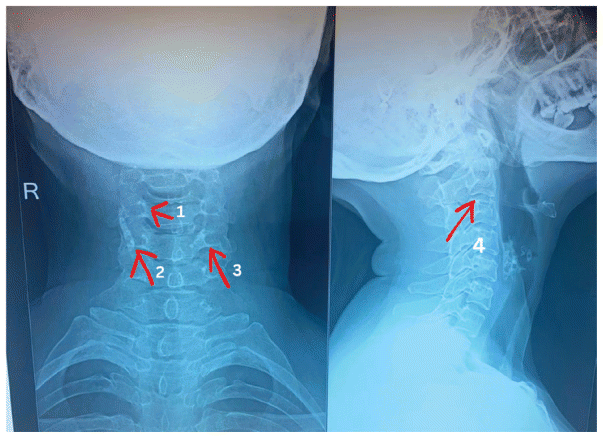
Figure 1 Radiograph of the cervical spine (AP and lateral views). The lateral view is in slight extension. Arrows show mild degeneration including reduced joint space or irregular margins seen in the facet joints of the C4, C5, and C6 vertebrae.
Bhakti Gauns, MPT,1 Aarti Welling, MPT, (PhD),1 Vijay Kage, MPT, PhD,1 Peeyoosha Gurudut, MPT, (PhD),1* Soumya Hulamani, MPT, (PhD)1
1Department of Orthopedic Physiotherapy, KAHER Institute of Physiotherapy, Nehru Nagar, Belagavi, India
Background
Cervical spondylosis is a degenerative condition caused by age-related wear and tear of the spinal discs and joints. It can lead to stiffness, pain, and reduced mobility. Three-dimensional myofascial release (3D-MFR) is a technique that involves stretching, compression, and movement to release fascial restrictions, reduce pain, and improve mobility. This case report illustrates the application of 3D-MFR in the treatment of cervical spondylosis.
Purpose
To evaluate the effectiveness of 3D-MFR combined with strengthening exercises on pain, proprioception, range of motion (ROM), and function in a patient with cervical spondylosis.
Participant description
A 55-year-old female reported with chronic neck discomfort, stiffness, and functional restrictions caused by cervical spondylosis. She was a pathologist by occupation, and her condition was exacerbated by prolonged use of a microscope at work, which required sustained neck flexion and suboptimal posture.
Intervention
The patient underwent 3D-MFR in combination with neck strengthening exercises over a period of 5 weeks.
Results
The patient demonstrated significant improvements in pain, ROM, proprioceptive accuracy, and functional capability. The outcome measures used for assessment included the Visual Analog Scale, goniometer-based ROM, joint position error test, and the Neck Disability Index.
Conclusion
This case report supports the potential efficacy of 3D-MFR and neck strengthening exercises in treating symptoms of cervical spondylosis and enhancing cervical spine function, particularly for individuals with work-related postural demands.
KEYWORDS: Spondylosis; fascia; pain; range of motion; proprioception; function
Cervical spondylosis is a degenerative condition that affects the cartilage and bones of the cervical spine, as described by Waheed et al.(1) According to epidemiological data, cervical spondylosis is associated with aging, but it may also be aggravated by factors such as repetitive neck movements and suboptimal postures.(2) The most noticeable feature of this is neck pain, which is accompanied by neck stiffness, limited range of motion (ROM), proprioceptive deficits, and functional impairment. These symptoms interfere with work, daily activities, and leisure pursuits.(2) Conventional physical therapy for cervical spondylosis includes postural training, exercise therapy, manual therapy, and functional training.(3) These interventions aim to enhance the patient’s quality of life and minimize the impact of the condition on daily activities.(3)
In cervical spondylosis, the fascia surrounding the neck and cervical spine may be subjected to increased mechanical stress, potentially leading to the development of myofascial restrictions.(4) This is primarily due to changes in the intervertebral discs and facet joints, which can contribute to stiffness and limited ROM in the cervical spine. With aging, the degeneration and limited mobility advance, leading to a loss of elasticity and hydration in the fascia. As a result, it becomes tighter and stiffer. In cervical spondylosis, these changes add to the worsening of symptoms, further limiting normal movement, flexibility of neck muscles, and surrounding tissues.(3,4) These combined effects highlight the importance of fascial involvement in cervical spondylosis, emphasizing the need to address soft tissue dysfunction as part of a comprehensive treatment approach for affected patients.(4)
Fascia is a continuous connective tissue network that envelops, interconnects, and supports muscles, bones, nerves, and organs throughout the body. The fascia extends from head to toe, integrating the body’s structures into a functional system. Fascia’s primary function is to distribute mechanical tension and force produced by muscle contractions throughout the body, allowing for coordinated movement and efficient energy transfer during physical activity.(5) Fascia also plays a vital role in proprioception. Specialized sensory receptors inside fascia, known as mechanoreceptors, detect changes in tension and pressure and provide feedback to the brain about the body’s position and movement.(4)
Three-dimensional myofascial release (3D-MFR) is an emerging technique designed to release fascial restrictions and restore mobility within the fascia system.(6) 3D-MFR is a new and less explored method for treating cervical spondylosis. 3D-MFR may be preferred over traditional MFR because it is designed to address fascial dysfunctions in all three planes of movement. Unlike traditional myofascial release, which typically uses one- or two-directional techniques, 3D-MFR involves multidirectional mobilization across three fascial planes—longitudinal, transverse, and oblique. This technique facilitates the release of fascial restrictions by applying slow, sustained pressure in multiple directions as the patient moves, allowing the fascia to gradually soften and release tension layer by layer. It effectively reaches deeper restrictions that may be missed by single-direction stretches and addresses the interconnected nature of the fascial system.(7,8) Unlike standard MFR, which typically involves static pressure or linear stretching, 3D-MFR combines gentle rotational forces with fascial gliding techniques, which involve the application of sustained, low-load manual pressure and subtle, multidirectional movements across the fascial planes.(7,8) These movements allow the fascial layers to slide over one another, promoting the release of restrictions that limit mobility and targeting deeper fascial layers. Gentle stretching slowly lengthens the tissue, while dynamic adjustments of small movements release tightness and improve mobility.(8,1) This method may be particularly beneficial in conditions like cervical spondylosis, where chronic postural strain and fascial adhesions limit mobility and contribute to pain. With this technique, practitioners employ sustained pressure with their hands or elbows, coupled with stretching, to release fascial restrictions and restore tissue elasticity and function. The technique seeks to provide relief from pain and dysfunction by relieving constraints in the fascial system, improving tissue elasticity, enhancing proprioception, and restoring normal movement patterns.(7) Furthermore, 3D-MFR could potentially reduce tension-related symptoms and encourage relaxation. While previous randomized controlled trials have explored the effectiveness of 3D-MFR in populations with asymptomatic hyperlordosis,(8) its application in patients with cervical spondylosis has not been investigated. Therefore, the aim of this study was to evaluate the effect of 3D-MFR on pain, ROM, proprioception, and function in a patient with cervical spondylosis.
A 55-year-old female pathologist presented to the outpatient physiotherapy department with symptoms of neck pain, stiffness, and limited neck movement. She experienced recurrent mild to moderate episodes of neck stiffness and pain over the past year, particularly after long workdays, which temporarily subsided with rest but recurred frequently. Her job necessitated her to use a microscope for 6–8 h each day, which required continuous neck flexion, shoulder abduction, and the forearms placed in mid-prone position on the table, as well as extensive periods of standing. The above factors most likely contributed to the mechanical stress and strain on her cervical spine. The patient described a gradual development of symptoms over several months, which had been exacerbated by her work position and lengthy hours spent using a microscope.
On observation, posture assessment revealed classic abnormalities associated with cervical spondylosis. The patient exhibited rounded shoulders and forward head posture. Rounded shoulders refer to a slouched upper body in which the shoulders roll forward, while forward head posture is characterized by the head being positioned anterior to the body’s center of gravity, with the ear aligned in front of the shoulder when viewed from the side. This postural deviation is often the result of prolonged suboptimal posture, which contributes to increased mechanical stress on the cervical spine. The patient’s posture, along with her professional demands, suggested that her cervical spine had been subjected to accumulated strain over many years of pathology practice. Tenderness in the cervical muscles, as well as muscle tension in the upper trapezius, levator scapulae, and suboccipital muscles, was noted. The patient had no known comorbidities, and there was no family history of cervical spondylosis. Imaging studies, including radiographs, indicated degenerative abnormalities in the cervical spine as reported by the radiologist (Figure 1), which supported a diagnosis of cervical spondylosis. The Visual Analog Scale (VAS) was used to measure pain intensity. The VAS is a self-reported scale with extreme anchors ranging from 0 to 10 cm. A reduction in pain intensity of 5 cm or more is considered clinically significant. High scores indicate the worst pain, while low scores indicate the least pain.(8,9) Joint position error (JPE) test is a therapist-administered test for assessing neck proprioception. A laser pointer is attached to the patient’s head with a strap or hat, and a target is placed on a wall at a distance of 90 cm. The patient was instructed to rotate their head to the right and left, returning to the initial posture with eyes open; then the test was repeated with the patient blindfolded. The error in degrees between the target and reference positions was determined using the formula (angle = tan−1 (error distance/90 cm)), providing a measure of proprioceptive accuracy, which is defined as the ability to sense the position and movement of your body parts with precision. The acceptable error range is 4.5° or lower.(8–11) A goniometer was used to assess cervical ROM. Cervical flexion and lateral flexion to both sides (right and left) ranges were assessed as they are affected during cervical spondylosis. Disc dehydration and loss of disc height reduce the mobility of cervical segments, particularly limiting cervical flexion. Osteophyte formation at the facet joints further limits motion, particularly lateral flexion, due to encroachment on the neural foramen.(5,6) The patient was seated on a chair for the cervical flexion measurement. The stationary arm of the goniometer was aligned perpendicular to the floor, and the movable arm was in line with the base of the nose. For lateral flexion, the axis was placed over the spinous process of C7, the stationary arm aligned with the thoracic spine, and the movable arm aligned with the occipital protuberance.(9–12) Cervical rotation is commonly used for JPE testing due to its demonstrated reliability and sensitivity in detecting proprioceptive deficits, as supported by previous literature.(8–10) Flexion and lateral flexion were prioritized for ROM measurement, as these movements are typically the most functionally limited in cervical spondylosis patients. Thus, the use of different planes for JPE and ROM was intentional, aiming to capture the most clinically relevant deficits in both proprioception and mobility.(5,8,10) The Neck Disability Index (NDI), a self-rated scale for neck disability, was used to measure functional limitations. The NDI score, rated from 0 to 50, was multiplied by two to obtain a percentage score, with a higher percentage indicating greater disability.(11–14) The patient was in a sitting position for all the tests. Pre- and post-session values were recorded on sessions 1 and 15, respectively.
|
| ||
|
Figure 1 Radiograph of the cervical spine (AP and lateral views). The lateral view is in slight extension. Arrows show mild degeneration including reduced joint space or irregular margins seen in the facet joints of the C4, C5, and C6 vertebrae. | ||
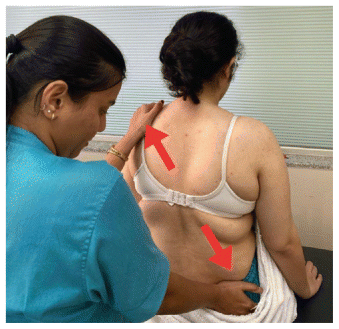
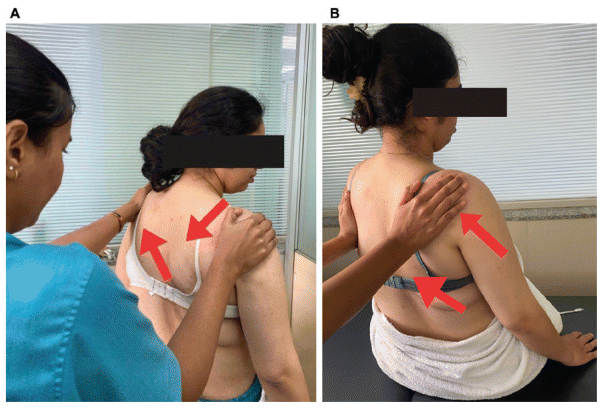
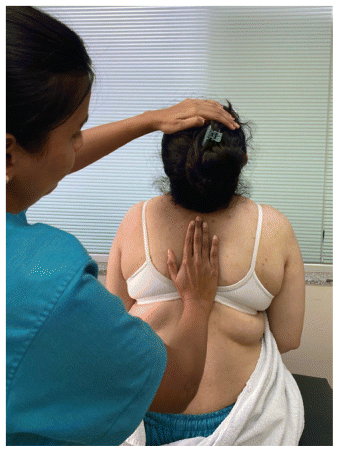
The intervention was provided by a certified manual therapist with 10 years of. The patient was treated with a 5-week protocol that included 3D-MFR combined with strengthening exercises. Strengthening exercises were prescribed to target the neck flexors and extensors, aiming to improve cervical spine stability. Exercises included neck isometrics, which were performed with the patient in a seated position. The patient was instructed to resist gentle manual pressure applied by the therapist in six directions: flexion, extension, right and left lateral flexion, with three repetitions per set, five sets per session, each held for 5 s.(4,14,15) The isometric exercises were followed by 3D-MFR focused on releasing fascial restrictions around the cervical spine, shoulders, and thoracic region. The patient was seated on a treatment table. Specific techniques included technique 1 (Figure 2), in which a diagonal stretch was applied with one hand on the posterior aspect of the shoulder and the other on the contralateral posterior superior iliac spine. The stretching force was applied laterally from side to side, while the patient was simultaneously instructed to perform forward trunk flexion.(16) Technique 2 (Figure 3A) treatment was performed in three dimensions by applying a diagonal stretch downward on one shoulder with one hand and a diagonal stretch upward and slightly forward on the other shoulder to initiate stretch in trunk rotation.(16) In technique 3 (Figure 3B), in response to feedback, the patient’s spontaneous trunk rotation and shoulder movements were followed. Each movement was exaggerated, and the end position was extended using stretch or compression.(16) For the fourth technique (Figure 4), the patient was seated on the treatment table, and the therapist was standing behind the patient. The therapist placed one hand on top of the patient’s head to guide movement, and the other hand was placed on the posterior aspect of the patient’s upper back. The patient was instructed to perform neck extension against gentle counterpressure applied to the upper back. Neck extension was gradually increased while ensuring the movement remained pain-free.(16) Each technique was executed for three sets, each position held for 90 s.(8,16) The patient underwent treatment three times per week for 5 weeks.
|
| ||
|
Figure 2 Technique 1: three-dimensional stretch with trunk flexion. | ||
|
| ||
|
Figure 3 (A) Technique 2 and (B) technique 3: three-dimensional stretch with trunk rotation. | ||
|
| ||
|
Figure 4 Technique 4: three-dimensional stretch with neck extension. | ||
Informed consent was obtained from the patient before all procedures and the preparation of this case report. The patient was provided with a thorough explanation of their diagnosis, treatment options, potential risks, and benefits. This included the purpose of publishing this case report and the potential implications of sharing their clinical details.
The patient experienced significant improvements in all outcome measures at 5 weeks post-intervention with 3D-MFR combined with strengthening exercises. Pain intensity, as assessed by VAS, was reduced by 5 cm, meeting the minimal clinically important difference (MCID). Objective assessments, including the JPE test and goniometry, demonstrated notable improvement (Table 1). Functional status, as assessed by NDI, also demonstrated substantial improvement, with a 15% reduction, meeting the MCID threshold. Additionally, there was a reduction in the recurrence of symptoms. The patient was provided with a home exercise program that included strengthening exercises targeting the neck flexors and extensors, performed as three repetitions per set, five sets in total, with each repetition held for 5 s. The patient was followed up 3 months after completion of the intervention to appreciate the carryover effects of treatment. The patient tolerated treatment well and adhered to all intervention sessions with proper follow-ups. There were no unanticipated or adverse events.
Table 1 Outcome Measures of Pre- and Post-intervention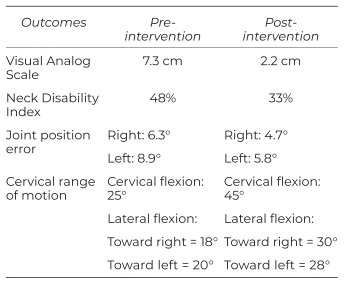
This case report presents a 55-year-old female with cervical spondylosis. An intervention combining 3D-MFR and strengthening exercises was applied. The patient showed notable improvements in pain, ROM, proprioception, and function following the treatment. Cervical spondylosis, a degenerative disorder of the cervical spine, is frequently linked with neck discomfort, proprioceptive deficits, restricted ROM, and limited function. MFR is a well-known treatment aimed at decreasing fascial limitations and improving musculoskeletal function.(1,4) Previous studies have demonstrated that MFR and strengthening exercises are effective in reducing pain and improving cervical spine mobility, likely through mechanisms such as the release of fascial restrictions, improved local circulation, and decreased muscle tension.(17–21) Building on this evidence, 3D-MFR is a new form of myofascial release that incorporates multidirectional fascial manipulation to more effectively engage the myofascial system in multiple planes of movement.(8,21,22) This approach facilitates three-dimensional movement within the fascia and has been associated with improved clinical outcomes in musculoskeletal disorders.(8,17,21,22) Given its potential to treat fascial dysfunctions, 3D-MFR was included in this trial combined with strengthening exercises to evaluate its efficacy in the management of cervical spondylosis. 3D-MFR was intentionally administered in a seated position to target fascial restrictions while maintaining an upright posture. Gravity facilitates natural tissue loading and elongation, enhancing the effectiveness of the release.(8,22) The VAS revealed a considerable reduction in discomfort after the intervention in this study. This positive outcome was most likely influenced by two key mechanisms: release of fascial limitations and muscle tightness. By focusing on fascial restrictions, 3D-MFR lowers nociceptive input from the myofascia.(8,22,23) This reduces local hypertonicity and tension, relieving pain.(10,23) The physical techniques of 3D-MFR enhance local blood circulation and help reduce inflammatory mediators, which are often elevated in individuals with cervical spondylosis.(8,22–24) In this study, cervical proprioception—commonly impaired in individuals with neck pain due to decreased sensorimotor control—showed significant improvement measured by JPE. Improvements can be attributed to enhanced sensory input from fascia and muscles, reduction in pain and inflammation, and improved motor control from neck muscle strengthening.(6,10,19,20,25) 3D-MFR stimulates mechanoreceptors and proprioceptors, allowing for greater neuromuscular feedback.(10,19,26) By lowering discomfort, 3D-MFR may have restored proper sensory input from the cervical spine.(22) This is consistent with current research that emphasizes the function of physical treatment in improving cervical proprioception via increasing somatosensory integration.(6,9,11,25) The intervention also resulted in considerable improvements in cervical ROM, as measured with a goniometer. This may be due to improved motor control due to 3D-MFR restoring tissue elasticity, allowing for freer joint movement by reducing muscle stiffness and fascial restrictions.(8) The increase in ROM can also be attributed to pain reduction, as reduced pain levels promote better movement patterns and joint mobility. Previous research supports the function of MFR and comparable approaches in recovering cervical ROM in individuals with degenerative spine diseases.(8,22) Functional outcomes, assessed by the NDI, demonstrated significant improvement post-intervention, likely due to increased cervical ROM and reduced pain intensity. Strengthening exercises help improve neck muscle support and stability, reducing strain on the cervical spine. They enhance posture, which can relieve pressure on nerves and joints. Stronger muscles improve endurance and make daily activities easier and less painful. Overall, these exercises have been shown to reduce pain and improve function in people with neck pain and cervical spondylosis.(27) The observed functional improvements may be attributed to a combination of pain reduction, enhanced proprioceptive input, and increased ROM, all of which are known to support better neuromuscular control and movement efficiency.(10,27,28) Psychological benefits, decreased discomfort, and enhanced mobility frequently lead to better patient confidence and fewer fear-avoidant behaviors, further improving function.(17,21) These findings are supported by recent research demonstrating the multifaceted effects of manual therapy modalities, including MFR, on functional recovery in patients with cervical spine problems.(2,5,8)
Despite these promising outcomes, the single-case nature of this report limits the generalizability of the findings. Future research should focus on randomized controlled trials with larger sample sizes to validate the efficacy of 3D-MFR. Additionally, investigating the long-term effects of the intervention could also provide valuable insights into its role in preventing symptom recurrence. Overall, this case report highlights the potential benefits of integrating 3D-MFR into physiotherapy protocols for cervical spondylosis. It demonstrates that by targeting fascial restrictions, 3D-MFR not only alleviates pain and improves ROM, but also enhances proprioceptive accuracy and functional outcomes. These findings support its inclusion as a component of multimodal rehabilitation strategies, particularly for patients with occupational-related postural demands. Furthermore, future studies are warranted to establish broader applicability and to optimize therapeutic protocols.
The authors acknowledge the academic support and clinical insights gained during postgraduate dissertation work.
The authors declare there are no conflicts of interest.
No sources of funding were used in this study.
1. Waheed MA-A, Hasan S, Tan LA, Bosco A, Reinas R, ter Wengel PV, et al. Cervical spine pathology and treatment: a global overview. J Spine Surg. 2020;6(1):340–350. https://doi.org/10.21037/jss.2020.01.12
Crossref PubMed PMC
2. Saunders LM, Sandhu HS, McBride L, Maniarasu VS, Taylor S, Dhokia R. Degenerative cervical myelopathy: an overview. Cureus. 2023;15(12):e50387. https://doi.org/10.7759/cureus.50387
3. Chen Q, Wang Z, Zhang S. Exploring the latest advancements in physical therapy techniques for treating cervical spondylosis patients: a narrative review. Biomol Biomed. 2023;23(5):752–759. https://doi.org/10.17305/bb.2023.9049
Crossref PMC
4. Ganjaei KG, Ray JW, Waite B, Burnham KJ. The fascial system in musculoskeletal function and myofascial pain. Curr Phys Med Rehabil Rep. 2020;8(4):364–372. https://doi.org/10.1007/s40141-020-00302-3
Crossref
5. Ragunath R. Efficacy of fascial stretch therapy: PNF pattern of deep back ARM line in patient with mechanical neck pain: a quasi experimental study. Indian J Physiother Occup Ther. 2023;17(1):88–93. https://doi.org/10.37506/ijpot.v17i1.18985
Crossref
6. Mangaiarkarasi P, Mohamed Musthafa M, Siddique Ali TR. Effectiveness of varmam in the management of cervical spondylosis – literature review. J Res Bio Med Sci. 2020;3(3):72–76.
7. Sayaca Ç, Çalik M, Eyüboğlu F, Kaya D. Architecture of fascia and its adaptation to pathological conditions. In: Comparative Kinesiology of the Human Body. Elsevier; 2020:149–154.
Crossref
8. Welling A, Patil A, Gunjal P, Naik P, Hubli R. Effectiveness of three-dimensional myofascial release on lumbar lordosis in individuals with asymptomatic hyperlordosis: a placebo randomized controlled trial. Int J Ther Massage Bodywork. 2024;17(2):20–31. https://doi.org/10.3822/ijtmb.v17i2.957
Crossref PubMed PMC
9. Gonçalves C, Silva AG. Reliability, measurement error and construct validity of four proprioceptive tests in patients with chronic idiopathic neck pain. Musculoskelet Sci Pract. 2019;43:103–109. https://doi.org/10.1016/j.msksp.2019.07.010
Crossref
10. Rahnama L, Saberi M, Kashfi P, Rahnama M, Karimi N, Geil MD. Effects of two exercise programs on neck proprioception in patients with chronic neck pain: a preliminary randomized clinical trial. Med Sci (Basel). 2023;11(3):56. https://doi.org/10.3390/medsci11030056
11. AlDahas A, Heneghan NR, Althobaiti S, Deane JA, Rushton A, Falla D. Measurement properties of cervical joint position error in people with and without neck pain: a systematic review and narrative synthesis. BMC Musculoskelet Disord. 2024;25(1):44. https://doi.org/10.1186/s12891-023-07111-4
Crossref PubMed PMC
12. Wolan-Nieroda A, Guzik A, Mocur P, Drużbicki M, Maciejczak A. Assessment of interrater and intrarater reliability of cervical range of motion (CROM) goniometer. Biomed Res Int. 2020;2020:1–8. https://doi.org/10.1155/2020/8908035
Crossref
13. Young IA, Dunning J, Butts R, Mourad F, Cleland JA. Reliability, construct validity, and responsiveness of the neck disability index and numeric pain rating scale in patients with mechanical neck pain without upper extremity symptoms. Physiother Theory Pract. 2019;35(12):1328–1335. https://doi.org/10.1080/09593985.2018.1471763
Crossref
14. Lin T, Wang Z, Chen G, Liu W. Predictive effect of cervical sagittal parameters on conservative treatment of single-segment cervical spondylotic radiculopathy. World Neurosurg. 2020;134:e1028–e1036. https://doi.org/10.1016/j.wneu.2019.11.081
Crossref
15. González-Rueda V, López-de-Celis C, Bueno-Gracia E, Rodríguez-Sanz J, Pérez-Bellmunt A, Barra-López ME, et al. Short- and mid-term effects of adding upper cervical manual therapy to a conventional physical therapy program in patients with chronic mechanical neck pain. Randomized controlled clinical trial. Clin Rehabil. 2021;35(3):378–389. https://doi.org/10.1177/0269215520965054
Crossref
16. Manheim CJ. The Myofascial Release Manual. 3rd ed. SLACK Inc.; 2008:244–245.
17. Han B. Evaluation of the efficacy of myofascial therapy for cervical spine diseases. Int J Gen Pract Nurs. 2023;1(2):21–25. https://doi.org/10.26689/ijgpn.v1i2.5752
18. Abdel-aziem AA, Draz AH, Battecha KH, Mosaad DM. Effect of ultrasound combined with conventional therapy on neck pain, function, and disability in patients with cervical spondylosis: a randomized placebo-controlled trial. J Musculoskelet Pain. 2014;22(2):199–205. https://doi.org/10.3109/10582452.2014.907853
Crossref
19. Alahmari KA, Reddy RS. Unveiling the nexus of cervical proprioception, postural stability, and impeding factors in cervical spondylosis: insights from reposition errors, limits of stability, and mediation analysis. Appl Sci. 2024;14(1):193. https://doi.org/10.3390/app14010193
Crossref
20. Xiong J, Zhang Z, Zhang Z, Ma Y, Li Z, Chen Y, et al. Short-term effects of kinesio taping combined with cervical muscles multi-angle isometric training in patients with cervical spondylosis. BMC Musculoskelet Disord. 2023;24(1):38. https://doi.org/10.1186/s12891-023-06154-x
Crossref
21. Rostron S. The effects of massage therapy on a patient with migraines and cervical spondylosis: a case report. Int J Ther Massage Bodywork. 2021;14(3):15–21. https://doi.org/10.3822/ijtmb.v14i3.629
Crossref PubMed PMC
22. Gashi AI, Azemi A. Comparative efficacy of isometric versus dynamic exercises on cervical spondylosis. Sport Mont. 2022;20(2):23–26. https://doi.org/10.26773/smj.220604
Crossref
23. Sezerel B, Yüksel İ. Efficacy comparison of osteopathic muscle energy techniques and cervical mobilization on pain, disability, and proprioception in cervical spondylosis patients. Med Sci Monit. 2024;30:e945149. https://doi.org/10.12659/MSM.945149
Crossref PMC
24. Mohanty P, Pattnaik M. Myofascial release for the management of cervical compressive myelopathy – case study. Jap J Clin Med Res. 2021;1(2):1–5. https://doi.org/10.47363/jjcmr/2021(1)105
Crossref
25. Panihar U, Joshi S. Enhancing respiratory functions and cervical proprioception with myofascial release and feedback respiratory training in forward head posture: a pilot randomized controlled trial. J Nat Sci Med. 2024;7(4):276–283. https://doi.org/10.4103/jnsm.jnsm_46_24
Crossref
26. de Araújo WN, dos Santos Nascimento Oliveira L, de Araujo TN, de Souza JR, de Almeida Cavalcante ALR, Takada JAP, et al. Effectiveness of acupuncture and myofascial release in analgesia of women with tensional neck pain: systematic review. Int J Adv Eng Res Sci. 2019;6(12):464–470. https://doi.org/10.22161/ijaers.612.54
Crossref
27. Choubisa CA, Vishnu Vardhan GD, Bele A. Impact of therapeutic ultrasound and myofascial release technique on quality of life of students having neck pain following virtual learning. J Pharm Res Int. 2021;33(44B):466–473. https://doi.org/10.9734/jpri/2021/v33i44b32698
Crossref
28. Aydoğmuş H, Şenocak Ö, Döner SM, Keskinoğlu P. Investigation of the effectiveness of neck stabilization exercises in patients with chronic neck pain: a randomized, single-blind clinical, controlled study. Turk J Phys Med Rehabil. 2022;68(3):364–371. https://doi.org/10.5606/tftrd.2022.8481
Crossref
Corresponding author: Peeyoosha Gurudut, Department of Orthopedic Physiotherapy, KAHER Institute of Physiotherapy, Nehru Nagar, Belagavi, India, E-mail: peeoo123@yahoo.com, Tel: +91-9844821355
COPYRIGHT
Published under the CreativeCommons Attribution-NonCommercial-NoDerivs 3.0 License.
International Journal of Therapeutic Massage and Bodywork, Volume 19, Number 1, March 2026