Melissa Clark, LMT, BCTMB,1 Beth Steinberg, PhD, RN, NEA-BC1*
1Center for Integrative Health, Department of Family and Community Medicine, Ohio State University, Columbus, OH, USA
Almost 1 million US adults are diagnosed annually with post-traumatic stress disorder related to medical trauma. Individuals who experience life-threatening illness or injuries, frequent hospitalizations, and multiple invasive procedures are more likely to develop post-traumatic stress and touch aversion, making it difficult for them to relax and feel safe in healthcare settings. Psychological and somatic symptoms can complicate recovery and decrease quality of life. While massage has been shown to offer a variety of physical and psychological benefits, little is known about the benefits of massage for those diagnosed with post-traumatic stress and touch aversion related to medical trauma. A 44-year-old female was referred to massage therapy for muscle pain and generalized weakness, symptoms of a chronic degenerative illness with limited treatment options. Complicated by multiple diagnoses, her long-standing anxiety and depression had worsened, and she suffered from post-traumatic stress and touch aversion due to significant medical trauma. The patient’s goals included relaxation, decreased pain and anxiety, as well as improvements in her aversion to touch when receiving necessary medical care. A wide variety of massage techniques were offered based on the patient’s physical and psychological symptoms, and her receptivity to touch. Over the course of 2 years, the patient’s anxiety and distress decreased as her ability to communicate her needs increased. A trauma-informed approach is essential when providing massage for those with post-traumatic stress and touch aversion from medical trauma. A pre-massage consultation and customization of the massage allowed the patient to provide consent and have control over where and how her body was touched, something that is often not possible with medical procedures. Further research is needed to determine how best to provide massage therapy to these individuals and measure outcomes related to effectiveness and symptom improvement.
KEYWORDS: Massage therapy; medical trauma; touch aversion; post-traumatic stress disorder
A 44-year-old female was referred to massage therapy for muscle pain and generalized weakness, symptoms of a chronic degenerative illness with limited treatment options. Complicated by multiple medical diagnoses, her long-standing anxiety and depression had worsened, and she experienced post-traumatic stress as a result of significant medical trauma over the previous 6 years. Her primary provider requested massage therapy with the goal of providing relief from her muscle pain and offering a relaxing break from her medical regimen. Her provider was also hopeful that by establishing a consistent and trusting relationship with a massage therapist, the patient’s ability to contribute and make decisions about her health care would be enhanced, and her aversion to touch from experiencing multiple invasive procedures and surgeries might be lessened. The patient was accepting of the massage therapy referral and hoped it would help her relax, improve her pain, and decrease her anxiety and aversion to touch when receiving medical care. This patient was chosen based on her complex physical and psychosocial diagnoses that have disrupted her personal and professional life and significantly limited her ability to feel safe while receiving health care.
Massage therapy is a widely accepted complementary treatment offering a range of physical, emotional, and psychological benefits. For musculoskeletal pain and muscle tension, various massage techniques have been effective for reducing pain and improving circulation.(1–3) As a complement to traditional medical care, massage therapy can help decrease stress and anxiety while promoting deep relaxation and improving mood.(4,5) However, for people who suffer from post-traumatic stress and touch aversion from medical trauma, massage therapy must be tailored to accommodate the client’s specific needs using a trauma-informed approach.(6)
While post-traumatic stress disorder (PTSD) is commonly diagnosed in combat veterans and victims of abuse, almost 1 million US adults are diagnosed annually with PTSD related to medical trauma.(6,7) Those who experience life-threatening illness or injuries, extended or frequent hospitalizations, and multiple invasive medical procedures are more likely to develop PTSD related to medical trauma. Even after the acute illness or injury has resolved, the sight, sounds, and smells characteristic of health-care environments can re-traumatize patients, making it difficult for them to relax and feel safe in health-care settings.(7–9) Psychological symptoms such as anxiety and depression are common, often exacerbated by intrusive thoughts and fear of mortality. Hyperarousal, a common symptom of illness-induced PTSD, can trigger somatic symptoms, complicating physical recovery and healing and decreasing quality of life.(10,11) Touch aversion resulting from medical trauma can also alter perceptions of safe social contact, disrupting intimacy, and limiting traditional touch such as hugs, kisses, and even a pat on the back between family and friends.(12)
As part of the overall care plan, massage therapy can offer a safe and comforting way for people with PTSD from medical trauma and touch aversion to reconnect with their body and emotions.(13,14) Xie and Feeney(3) describe how massage positively affects the brain’s opioid system by promoting relaxation, improving emotions, and decreasing heart rate and blood pressure. However, for those with touch aversion due to physical abuse, medical trauma, or even conditions such as autism, massage may induce physical discomfort and emotional distress. In these circumstances, massage must be offered with a sensitive and tailored approach to allow the person the ability to set boundaries and maintain a sense of control. Honoring preferences for areas of the body to be massaged, pressure and intensity of touch, positioning, and the option to remain fully clothed during each massage session can help increase comfort with physical touch.(10)
The research question for this case report was to evaluate if adaptive therapeutic massage could improve the physical, psychological, and emotional symptoms experienced by a patient with a painful degenerative illness, multiple chronic medical diagnoses, and PTSD from medical trauma. While there is limited research specific to the benefits of massage for those with PTSD from medical trauma, evidence related to the management of those who have experienced illness- or injury-induced trauma with the use of trauma-informed approaches to health care is relevant to this case report.
A 44-year-old female who worked as an administrator in a childcare facility was referred for massage by her primary care provider for help with medical trauma, anxiety, and muscle pain and tension. She is a married mother of one adult child and one child who was 10 years old at the start of the massage sessions. The patient’s medical diagnoses include benign neoplasms of the colon, liver, and biliary ducts, autoimmune autonomic ganglionopathy, cervical degenerative disc disease, hypertension, metabolic syndrome, anxiety, depression, and chronic pain syndrome. Since 2017, the patient has undergone at least 13 surgeries and multiple invasive diagnostic medical procedures. Her extensive medication regime includes routine immunoglobulin infusions, anti-hypertensives, an antidiabetic, anti-depressant, anxiolytic, and several medications for pain. Per her primary provider, the patient’s long-standing anxiety and depression have intensified as her health has continued to decline.
During the initial assessment and massage session, it was noted that the patient had significant anxiety and difficulty relaxing. Due to illness and medical procedures, massage appointments were inconsistent from May 2022 to December 2023 with the patient receiving only 11 sessions. However, beginning March 2024, massage appointments were consistently provided at least monthly. With the patient currently receiving palliative care, her schedule has been more flexible, and she received 16 appointments in 2024.
The patient provided written consent to anonymous reporting of her case. This case report follows the “Adapted CARE Guidelines for Therapeutic Massage and Bodywork Publications.”(15)
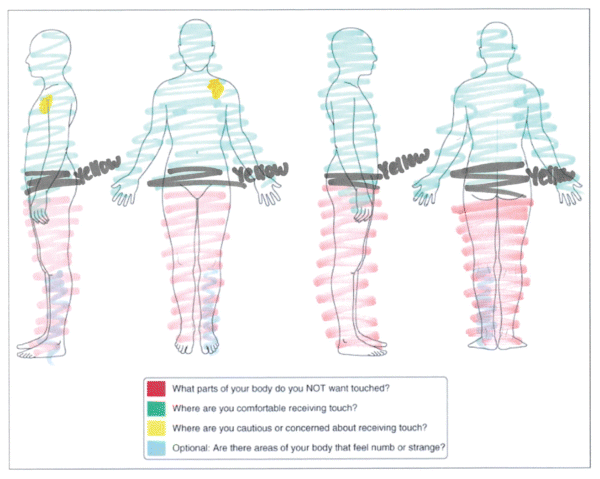
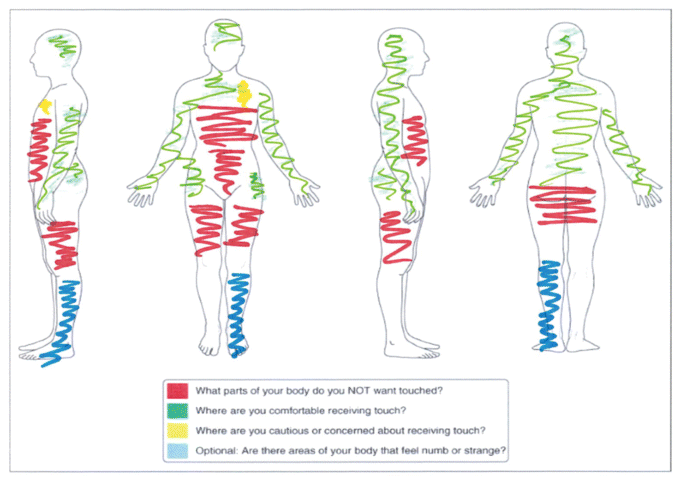
Initially, the massage practitioner relied heavily on both verbal and visual cues, as well as palpation of soft tissue. Assessments occurred before, during, and after each massage with the treatment plan adapted as necessary. Along with physical challenges such as worsening pain and disease progression, the patient experienced increased emotional issues brought on by having to give up her work responsibilities and the need to communicate to family about transitioning to palliative care. In this massage practice, standardized assessment tools are not routinely used. Due to this patient’s unique diagnoses and past trauma, it was difficult to find assessment tools to measure the effectiveness of massage. The Subjective Units of Distress Scale (SUDS)(16) and the Fitch Body Diagram Assessment Tool(17) were added later to provide quantitative and qualitative assessments of her progress relative to pain, relaxation, and touch aversion. The SUDS is a self-report measure that allows ranking of anxiety and distress from 0, “no distress, totally relaxed,” to 100, “highest anxiety/distress that you have ever felt.” Comments can be added beneath the scale to qualify the rating.(16) The Fitch Body Diagram Assessment Tool is a color-coded safety assessment tool that allows the user to choose assorted colors to shade in areas of their body where they are or are not comfortable being touched. Red indicates “What parts of your body do you NOT want touched?”, green indicates “Where are you comfortable receiving touch?”, yellow indicates “Where are you cautious or concerned about receiving touch?”, and blue indicates “Optional: Are there areas of your body that feel numb or strange?”.(17)
The practitioner works as a licensed massage therapist in Ohio at a Center for Integrative Health that is part of an academic medical center. She holds an Associate of Science degree with over 27 years of full-time clinical experience and is board certified through the National Certification Board of Therapeutic Massage and Bodywork. Since 2022, she has completed over 25 hours of trauma-based training and has been focusing on patients who have experienced trauma, including PTSD.
The goal of each individual session was pain management, relief from musculoskeletal tension, relaxation, and stress reduction. The practitioner’s approach was to customize each session based on results from previous sessions and what the patient was experiencing on the day of the massage. The sessions were adapted by the therapist based on the immediate needs of the patient at the time of service, utilizing passive touch, compression, craniosacral techniques, myofascial release, trigger point therapy, reflexology, and Swedish-style relaxation techniques. The overarching goal was to achieve a cumulative effect of pain management and decreased touch aversion by using massage to desensitize the patient to touch, as well as provide relief from stress and anxiety. The patient made the decision to increase the frequency of massages within the last 6 months, choosing a second therapist with similar training for scheduling convenience. Because most of her medical providers were male, the patient acknowledged that receiving massage from two therapists with distinctive approaches, and the fact that the second therapist was male, allowed a progression of touch desensitization.
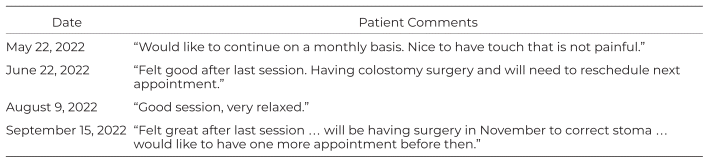
At her first visit in May 2022, the patient stated she “would like to continue on a monthly basis. It would be nice to have touch that is not painful.” Her comments in June, August, and September 2022 reflected increased physical and emotional comfort with the massage sessions (Table 1). Between September 2022 and November 2023, the patient underwent a major surgery and experienced an extended illness resulting in sporadic massage sessions. As the patient began scheduling more frequent and regular massages in late spring 2024, the SUDS was introduced to track her progress. While using the SUDS, the patient’s distress decreased during each appointment. For example, the SUDS indicated that her distress decreased from 40 (“mild-to-moderate anxiety or distress”) before one appointment in September 2024 to 20 (“minimal anxiety/distress”), two appointments later in October 2024. More importantly, in October 2024 after having had a total of 17 appointments since 2022, the patient recognized changes happening over time reporting feeling “more relaxed between sessions” and “less jumping when touched.” She also communicated benefits from her massage therapy sessions as her disease progressed and she continued to face medical procedures stating, “a small amount of anxiety returns when missing a [massage] appointment or with painful procedures such as multiple sticks.” She also stated she appreciated seeing massage on her schedule, felt relief that her massage therapist had access to her medical records, and enjoyed the convenience of receiving massage at the medical center location.
Table 1 Initial Patient Comments Related to Effects of Massage
As the patient began to feel more empowered communicating to the massage therapist and was more in touch with her body, the Fitch Body Diagram Assessment Tool(17) was utilized as it provided more descriptive information than the SUDS. An example of the patient’s shaded Fitch Body Diagram Assessment Tool with verbatim comments, completed prior to an October 2024 massage session, is shown in Figure 1. Her preferences only for upper body massage, with caution around her infusion port, were detailed by the shading and reinforced by her comments. Areas shaded red indicate her preferences for areas that were not to be touched, while the green shaded areas indicate her preferences for massage. In November 2024, her preferences, shown in Figure 2, shifted to include her hips while her legs continued to remain off-limits. Her comments provided the rationale during this visit. While her preferences for massage on different areas of her body changed slightly with each appointment, the infusion port in her left upper chest indicated an area of caution throughout the series of massage sessions and was always shaded yellow. Numbness in her left lower leg and the patient’s perception that massage on her legs was not helpful was consistently noted during her massage visits and shaded in blue each session. The ability of the patient to specifically identify where she preferred touch and her comments indicating her preferences for the massage session show improvement, given her history of medical trauma and touch aversion.
|
| ||
|
Figure 1 Fitch Body Diagram Assessment Tool.(17) Patient shading prior to massage therapy session, October 2024. Handwritten patient comments transcribed for publication: I don’t like legs touched due to not making a difference. I do like hips massaged but prefer not on first time with a new therapist. Hips and upper body I prefer with caution around port. | ||
|
| ||
|
Figure 2 Fitch Body Diagram Assessment Tool.(17) Patient shading prior to massage therapy session, November 2024. Handwritten patient comments transcribed for publication: I am comfortable with hips being massaged. I am not comfortable with upper legs. I still have neuropathy in left leg and prefer to not have legs massaged due to it making no change. Prefer to focus on areas that bring relief. | ||
This case report details the care of a patient with a complex history and deteriorating medical condition and demonstrates how massage often requires adaptability rather than a standard protocol. A trauma-informed approach was used during each massage session to build a trusting relationship between the patient and the massage therapist. The nature of pre-massage consultation and customization of the massage allowed her to provide consent and have control over where and how her body was touched, something that is often not possible with medical procedures. This approach also served to bolster the patient’s confidence when communicating her needs to the massage therapist. While there was an ebb and flow relative to the patient’s physical and emotional symptoms during the massage sessions, her ability to communicate her needs and perceptions improved overall. She stated that being able to see the massage sessions on her schedule of medical appointments, listed along with other procedures that likely included discomfort, also helped diminish the anxiety she felt regarding her overall medical regimen.
As there are no valid and reliable outcome measures for touch aversion related to medical trauma, quantifying the physical and emotional benefits of massage therapy for this patient is limited. However, for this patient the Fitch Body Diagram Assessment Tool(17) has proven to be an optimal assessment of progress. The color coding and the patient’s comments provide a clear overview of her improvements relative to her comfort with the massage therapists and her increasing ability to provide direction for the massages over time. Although the patient’s anxiety and distress relative to experiencing touch were measured later during the course of her massage sessions, the patient’s presentation and increasingly positive comments, as well as the increasing frequency of scheduled massage sessions, provide evidence that also supports improvement in her overall well-being.
This case report illustrates how massage therapy has affected one person’s experience with a serious progressive illness and the impacts on her physical, mental, and emotional state. As she has navigated medical treatments, massage has provided a relaxing respite and offered her an increased sense of control. For this patient, a mother of a school-age child and working professional whose career had involved working with children, her ability to interact physically and emotionally has been limited. Massage therapy has been critical in supporting her ability to cope and regain her sense of self. Through a therapeutic relationship with the massage therapist, the patient has been able to experience touch on her own terms, become more involved in her care, and feel less anxiety and distress over the past 2 years.
Those diagnosed with grave medical conditions who must undergo multiple and painful diagnostic procedures can experience significant physical and emotional pain that may result in PTSD and touch aversion from medical trauma. While the symptoms associated with PTSD and touch aversion significantly affect the individual, the effects on friends and family members cannot be underestimated. When delivered using a trauma-informed approach, massage can complement the prescribed medical regime and help clients manage significant physical and psychological discomfort. Massage has helped to mitigate some of these concerns for the patient in this case report. Further research is needed to determine how best to integrate massage into a complex medical regimen and introduce massage to individuals who have been diagnosed with PTSD from medical trauma. In addition, determining optimal ways to measure massage effectiveness and improvements in physical and psychological symptoms is essential.
The authors declare no potential conflicts of interest with respect to the research, authorship, and/or publication of this article.
The authors received no funding support for this case review.
1. Jagan S, Park T, Papathanassoglou E. Effects of massage on outcomes of adult intensive care unit patients: a systematic review. Nurs Crit Care. 2019;24(6):414–429. https://doi.org/10.1111/nicc.12417
Crossref PubMed
2. Simão S, Höring AC, de Lima B, Silva NC, Alfieri FM. Immediate effect of quick massage on muscle tension and pressure pain threshold. Braz J Pain. 2021;4(3):221–224. https://doi.org/10.5935/2595-0118.20210048
3. Xie Y, Feeney BC. A narrative review of research linking non-sexual social touch to sleep quality. J Sleep Res. 2024;33(5):e14174. https://doi.org/10.1111/jsr.14174
Crossref PubMed
4. Bervoets DC, Luijsterburg PA, Alessie JJ, Buijs MJ, Verhagen AP. Massage therapy has short-term benefits for people with common musculoskeletal disorders compared to no treatment: a systematic review. J Physiother. 2015;61(3):106–116. https://doi.org/10.1016/j.jphys.2015.05.018
Crossref PubMed
5. Bethers AH, Swanson DC, Sponbeck JK, Mitchell UH, Draper DO, Feland JB, et al. Positional release therapy and therapeutic massage reduce muscle trigger and tender points. J Bodyw Mov Ther. 2021;28:264–270. https://doi.org/10.1016/j.jbmt.2021.07.005
Crossref PubMed
6. McBain SA, Cordova MJ. Clinical education: addressing prior trauma and its impacts in medical settings. J Clin Psychol Med Settings. 2024;31(3):501–512. https://doi.org/10.1007/s10880-024-10029-1
Crossref PubMed
7. El-Gabalawy R, Mota N, Sommer JL, Edmondson D. Prevalence of illness-induced posttraumatic stress disorder in the United States. Psychosom Med. 2018;80(8):783–785. https://doi.org/10.1097/PSY.0000000000000635
Crossref PubMed
8. Krolak M, Hämmerli Keller K, Schmidt R, Nobel G, Germann N, Schmid D, et al. Prevalence of medically induced psychological trauma and its influence on women’s health. Int J Gynaecol Obstet. 2023;161(2):568–573. https://doi.org/10.1002/ijgo.14691
Crossref PubMed
9. Sommer JL, Mota N, Edmondson D, El-Gabalawy R. Comorbidity in illness-induced posttraumatic stress disorder versus posttraumatic stress disorder due to external events in a nationally representative study. Gen Hosp Psychiatry. 2018;53:88–94. https://doi.org/10.1016/j.genhosppsych.2018.02.004
Crossref PubMed
10. Grossman S, Cooper Z, Buxton H, Hendrickson S, Lewis-O’Connor A, Stevens J, et al. Trauma-informed care: recognizing and resisting retraumatization in health care. Trauma Surg Acute Care Open. 2021;6(1):e000815. https://doi.org/10.1136/tsaco-2021-000815
Crossref
11. Stevens L, Bregulla M, Scheele D. Out of touch? How trauma shapes the experience of social touch – neural and endocrine pathways. Neurosci Biobehav Rev. 2024;159:105595. https://doi.org/10.1016/j.neubiorev.2024.105595
Crossref
12. McBain S, Cordova MJ. Medical traumatic stress: integrating evidence-based clinical applications from health and trauma psychology. J Trauma Stress. 2024;37(5):761–767. https://doi.org/10.1002/jts.23075
Crossref PubMed
13. Elias LJ, Abdus-Saboor I. Bridging skin, brain, and behavior to understand pleasurable social touch. Curr Opin Neurobiol. 2022;73:102527. https://doi.org/10.1016/j.conb.2022.102527
Crossref PubMed
14. Sumpton B, Baskwill A. A series of case reports regarding the use of massage therapy to improve sleep quality in individuals with post-traumatic stress disorder (PTSD). Int J Ther Massage Bodywork. 2019;12(4):3–9.
PubMed PMC
15. Munk N, Boulanger K. Adaptation of the CARE Guidelines for Therapeutic Massage and Bodywork Publications: efforts to improve the impact of case reports. Int J Ther Massage Bodywork. 2014;7(3): 32–40. https://doi.org/10.3822/ijtmb.v7i3.251
PubMed PMC
16. Wolpe J. The Practice of Behavior Therapy. Pergamon Press; 1969.
17. Fitch P. Talking Body, Listening Hands: A Guide to Professionalism, Communication and the Therapeutic Relationship, 2nd ed. AC Press; 2019.
Corresponding author: Beth Steinberg, Center for Integrative Health, Department of Family and Community Medicine, Ohio State University, Suite 250 Northwood-High Building # 261, 2231 N. High Street, Columbus, OH 43201, USA, E-mail: Steinberg.35@osu.edu, Tel: +1-614-406-7067
COPYRIGHT
Published under the CreativeCommons Attribution-NonCommercial-NoDerivs 3.0 License.
International Journal of Therapeutic Massage and Bodywork, Volume 18, Number 3, September 2025