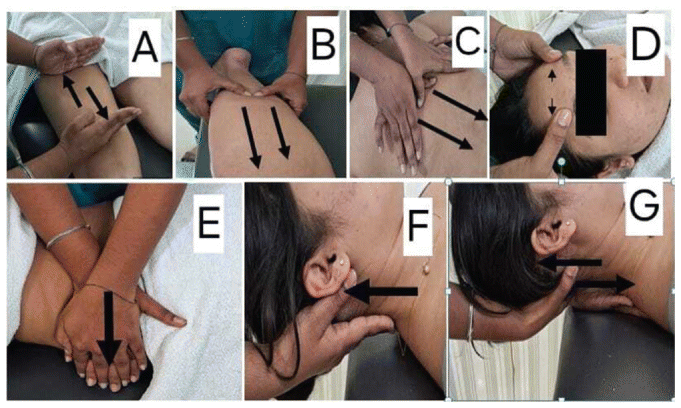
Figure 1 Manual myofascial release technique. (A) Hamstring muscle, (B) calf muscle, (C) erecter spinae muscle, (D) frontalis, (E) thoracolumbar fascia, (F) and (G) suboccipital muscle.
G. Nithisha, MPT,1 Peeyoosha Gurudut, MPT, PhD,1 Aarti Welling, MPT, PhD,1* Vijay Kage, MPT, PhD1
1Department of Orthopedic Physiotherapy, KAHER Institute of Physiotherapy, Nehru Nagar, Belagavi, India
Background
Sinus headaches often cause severe discomfort and significantly reduce quality of life (QOL). Sinus headache is associated with posterior chain tightness. Myofascial release (MFR) is primarily said to provide benefits like reduced pain, enhanced range of motion and flexibility, and improved QOL. Along with medical management, physiotherapy management acts as a promising complementary therapy. Previous studies, including manual therapy and electrotherapeutic modalities, have been successful in treating sinusitis.
Purpose
To determine the effect of MFR on treating sinus headaches, particularly its novel application with the manual drainage technique for posterior chain muscles in sinus headache, has not been explored. Methods: The present case report explores the effect of the release of posterior chain muscles with the manual drainage technique in a 40-year-old female with chronic sinus headache.
Results
The patient showed major improvements in headache intensity, frequency, and enhanced QOL.
Conclusion
These findings suggest that posterior chain MFR with the manual drainage technique can effectively manage sinus headaches. Further research is needed to validate the findings of this case study, including clinical and controlled trials.
KEYWORDS: Myofascial release; sinus headaches; sinusitis; headache; neck pain
“Sinus headache” is a common illness that is often misdiagnosed and poorly managed.(1) The term “sinusitis” describes a collection of conditions marked by inflammation of the paranasal sinus mucosa.(2) The global prevalence of adult-onset headache problems is 47%.(3) Sinus headaches affect approximately 13% of the overall population in Karnataka.(4) A study suggests that the majority of sinusitis illnesses that present as headaches are either acute or chronic sinusitis conditions.(2) It is also frequently observed in conjunction with other nonsinogenic and sinogenic conditions.(1) This condition can cause chronic nasal mucosal inflammation, nasal obstruction, facial pressure, pain, and chronic headaches and affects an individual’s quality of life (QOL).(5) Due to facial pressure pain, the muscles may become tense and tight from lack of use, which may cause pain, discomfort, and immobility, which increases their risk of injury and restricted range of motion.(6,7) Headache frequency and back pain disability are the factors affecting the mobility of the posterior myofascial chain, which connects various muscles, including the plantar fascia, hamstrings, sacrolumbar fascia, erector spinae, and epicranial aponeurosis, frontalis, and fascial sheath of the eyeball.(8) Myofascial release (MFR) has been found to have multiple advantages, including reduced pain, increased range of motion and flexibility, and improved QOL.(9) In previous studies, pulsed ultrasound therapy, low-level laser therapy, dry needling, and manual therapy combined with conservative management have been shown to be effective on sinusitis.(10–13) However, the release of posterior chain muscles is emerging as a novel adjunctive treatment for the management of chronic sinus headaches.
A 40-year-old female patient presented with a chief complaint of chronic rhinosinusitis, since 14 years repeated experience of congestion and headache. She experienced frequent episodes of neck pain, bilateral pain, bilateral facial pressure, and pain at the frontal and maxillary sinuses, blocked nose, reduced sense of smell, heaviness, and headache. She always felt drained of energy, disturbed sleep, and reduced QOL. The patient suffers episodes of sinusitis twice weekly. The patient has no significant medical or surgical history. Despite numerous exacerbations, antibiotics and anti-inflammatory therapies have been temporarily effective, and symptoms continue to recur.
General observation found a forward head posture and rounded shoulders in the resting position, along with bilateral puffiness of the face. Orthopedic examination revealed reduced cervical range of motion. Palpatory examination also revealed tenderness at the superior nuchal line, periorbital region, suboccipital region, and frontal and maxillary sinuses, and tightness present at the posterior myofascial chain. Informed consent was obtained from the patient before all procedures and the preparation of this case report. The patient was provided with a thorough explanation of their diagnosis, treatment options, potential risks, and benefits. This included the purpose of publishing this case report and the potential implications of sharing their clinical details.
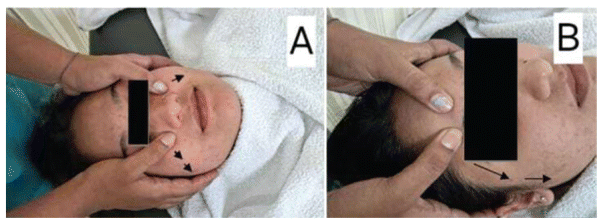
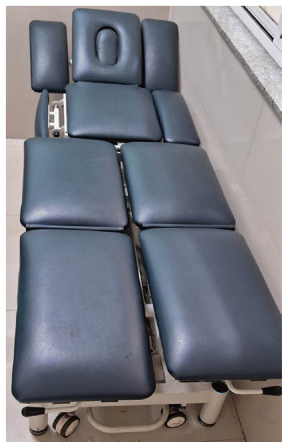
The sinus headache was treated by a qualified therapist using posterior chain release and a manual drainage technique. The thoracolumbar fascia, erector spinae muscle, hamstring, suboccipital muscle, and calf muscle were all treated with manual MFR (Figure 1).(14) The posterior chain was made less taut and tense by using MFR.(9) The frontal and maxillary sinuses were treated seven times using the manual drainage technique (Figure 2).(11) The patient was positioned prone on a manual therapy plinth for MFR of the thoracolumbar fascia, erector spinae, hamstrings, and calf muscles, while the suboccipital release and manual drainage technique were performed with the patient in a supine position (Figure 3). The three sets of manual MFR that were given to the patient were each held for 60 seconds. The treatment was administered twice a week for 8 weeks. The patient was followed up for 6 months and advised to continue medications, steam inhalation, and breathing exercises and to maintain the benefits achieved through therapy. During the follow-up period, the patient was regularly assessed for pain intensity and QOL through phone. The patient was able to manage symptoms effectively with continued therapeutic practices, highlighting the importance of maintaining the intervention for long-term relief.
|
| ||
|
Figure 1 Manual myofascial release technique. (A) Hamstring muscle, (B) calf muscle, (C) erecter spinae muscle, (D) frontalis, (E) thoracolumbar fascia, (F) and (G) suboccipital muscle. | ||
|
| ||
|
Figure 2 Manual drainage technique. (A) Maxillary sinus. (B) Frontal sinus. | ||
|
| ||
|
Figure 3 Manual therapy plinth. | ||
The numerical pain rating scale (NPRS) was used to measure headache intensity. The NPRS is a self-reported or clinician-administered measurement scale with extreme anchors ranging from 0–10 to 100. High scores indicate worst pain, while low scores indicate least pain, with reliability ranging from 0.67 to 0.97 and validity ranging from 0.79 to 0.95.(15) The Sino-Nasal Outcome Test includes 22 (SNOT-22) components that were used to assess the QOL in sinusitis patients. The SNOT-22 consists of 22 items each rated on a 0–5 scale where a score of 8–20 is regarded as mild impact, 21–50 as moderate impact, and >50 as severe impact. The SNOT-22 is a valid and reliable tool, with a reliability coefficient of 0.93.(16) Pressure algometry was used to calculate the pressure pain threshold (PPT) across a 4-point range, assigning points to frontal sinuses and maxillary sinuses. The patient was placed in the supine position for all algometry measurements, and the patient was given instructions that the pressure point threshold was defined as the minimum amount of pressure required to cause pain in that point, and the intraclass correlation coefficient ranges from 0.64 to 0.96.(17) The upper-quadrant posture was evaluated using the craniovertebral angle, while cervical mobility was assessed through the flexion-rotation test. Pre- and post-values were recorded at session 1 and session 16, respectively.
The patient experienced significant improvements in the NPRS, SNOT-22, PPTs for the frontal sinuses and maxillary sinuses on both sides, and the craniovertebral angle (Table 1). There was also an improvement in the flexion rotation test, a reduction in medication intake, and a decrease in the recurrence of symptoms. However, symptoms recurred twice within 6 months due to upper respiratory tract infections.
Table 1 Outcomes Measures of Pre- and Post-Intervention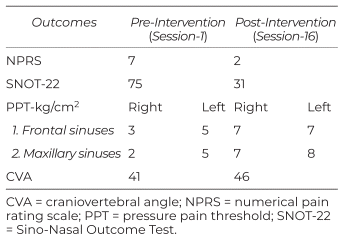
The purpose of the case study was to explore the effect of manual MFR in a patient with a sinus headache. The patient reported a significant reduction in headache severity, an increase in PPT at two specific sinus points, and improved scores on rhinosinusitis-specific symptom questionnaires and cervical ranges. The treatment of sinus headache using MFR intervention in this study had specific clinical objectives to reduce the pain intensity, and to improve the QOL and drainage of the sinuses.
MFR provides an alternative, holistic approach by focusing on releasing tension in interconnected muscles along the posterior myofascial chain. Releasing tension in the fascia and the surrounding muscles helps enhance blood flow and oxygen supply, contributing to reduction in headache. MFR improves circulation and trigger point therapy, and may influence the autonomic nervous system, promoting relaxation and reducing stress-related muscle tension. According to research, tension-type headaches were reduced by a hamstring relaxation exercise. Although the hamstring muscle is a component of the posterior myofascial chain, the authors suggest that self-MFR is a useful treatment for tension-type headache. Headache symptoms linked to suboccipital muscular tension were reduced by focusing on the hamstrings, which may help reduce suboccipital muscle tension.(18)
The posterior myofascial chain was identified as crucial for supporting functional mobility and musculoskeletal alignment. In patients with sinus headaches, chronic facial pressure and tension often led to muscle tightness in this chain, which could worsen headache persistence and reduce QOL. A study by Roberto Méndez-Sánchez et al. suggested that MFR of the anterior cervical region and mobilization of the maxilla and frontal bone were effective for sinusitis patients.(13) In this present case study, posterior chain muscles targeted the suboccipital muscles, erector spinae, thoracolumbar region, hamstrings, and calf muscles, which helped to reduce muscle tightness, improve QOL, and increase pain thresholds.
The “manual drainage technique” enhances the lymphatic drainage system. This approach enhances the flow of nutrients to the affected regions by removing pollutants. The internal state of equilibrium or homeostasis of the body is preserved through this process, which is crucial for recovery and general health. Regarding sinus headache research, this method might help lower inflammation, enhance sinus outflow, and eventually reduce discomfort.( 11) A previous study compared jade stone mobilization, non-abrasive cupping, and manual drainage for chronic sinusitis, finding all three effective, with jade stone mobilization showing the most lasting benefits.(19)
This case report highlights the effect of manual MFR along with the manual drainage technique as a therapeutic option for reducing sinus headache in patients. The positive outcomes observed in this case suggest that MFR with the manual drainage technique may offer a promising treatment in addition to conventional treatment. However, it is not possible to generalize the results to a larger demographic. Future randomized clinical trials are necessary to determine and validate the effectiveness of manual MFR with the manual drainage technique in treating individuals with sinus headache.
The case report demonstrates that manual MFR of the posterior chain along with manual drainage of sinuses when given as a complementary to medical care showed promising results in reducing pain intensity, improving sinus drainage, and enhancing the QOL in a case of sinus headache with benefits lasting up to 6 months.
The authors declare there are no conflicts of interest.
No sources of funding were used in this study.
1. Maurya A, Qureshi S, Jadia S, Maurya M. “Sinus headache”: diagnosis and dilemma?? An analytical and prospective study. Indian J Otolaryngol Head Neck Surg. 2019;71(3):367–370.
Crossref PubMed PMC
2. Kaur A, Singh A. Clinical study of headache in relation to sinusitis and its management. J Med Life. 2013;6(4):389–394.
3. Rizzoli P, Mullally WJ. Headache. Am J Med. 2018;131(1):17–24.
Crossref
4. Kumar KS, Devan PP. Do you really have sinus headache? Int J Otorhinolaryngol Head Neck Surg. 2019;5(3):554–559.
Crossref
5. Baisakhiya N. Efficacy of osteopathic manipulative treatment in the patient of chronic rhinosinusitis: a case report. Clin Rhinol An Int J. 2018;11(2 and 3):58–60.
Crossref
6. IHS Classification ICHD-3. 11. Headache or Facial Pain Attributed to Disorder of the Cranium, Neck, Eyes, Ears, Nose, Sinuses, Teeth, Mouth or Other Facial or Cervical Structure. Cited December 19, 2024. Available from: https://ichd-3.org/11-head-ache-or-facial-pain-attributed-to-disorder-of-the-cranium-neck-eyes-ears-nose-sinuses-teeth-mouth-or-other-facial-or-cervical-structure/.
7. Petersen SM, Jull GA, Learman KE. Self-reported sinus headaches are associated with neck pain and cervical musculoskeletal dysfunction: a preliminary observational case control study. J Man Manip Ther. 2019;27(4):245–252.
Crossref PubMed PMC
8. Prabu Raja G, Shyamasunder Bhat N, Marie Cruz A, Prabhu A, Fernandes S, Naaz N. The anatomical myofascial continuum between the neck and eyes. Clin Anat. 2022;35(3):340–346.
Crossref PubMed
9. Itotani K, Kawahata K, Takashima W, Mita W, Minematsu H, Fujita H. Myofascial release of the hamstrings improves physical performance—a study of young adults. Healthcare (Basel). 2021;9(6):674.
Crossref PubMed PMC
10. Allam NM, Eladl HM, Allam AH, Bohairi AL, Eldesouqi M, AlOmar SM, et al. Effect of laser therapy in the treatment of chronic rhino sinusitis: a review. Texila Int J Public Health. 2024;12(1).
Crossref
11. Fouda KZ, Eladl HM, Ameer MA, Allam NM. Effect of adding physiotherapy program to the conservative medical therapy on quality of life and pain in chronic rhinosinusitis patients. Ann Rehabil Med. 2023;47(5):393–402.
Crossref PubMed PMC
12. Alnwick GM, Clewley D, Beuning B, Koppenhaver S. Improvements after dry needling for craniofacial pain in a patient with chronic rhinosinusitis: a case report. Physiother Theory Pract. 2023;39(12):2740–2749.
Crossref
13. Méndez-Sánchez R, González-Iglesias J, Puente-González AS, Sánchez-Sánchez JL, Puentedura EJ, Fernández-de-Las-Peñas C. Effects of manual therapy on craniofacial pain in patients with chronic rhinosinusitis: a case series. J Manipulative Physiol Ther. 2012;35(1):64–72.
Crossref
14. Manheim C. The Myofascial Release Manual. 3rd ed. Taylor & Francis; 2024.
Crossref
15. Kahl C, Cleland J. Visual analogue scale, numeric pain rating scale and the McGill pain Questionnaire: an overview of psychometric properties. Phys Ther Rev. 2005;10(2):123–128.
Crossref
16. Sino-Nasal Outcome Test-22 Questionnaire v4. Cited February 13, 2024. Available from: https://www.myprivia.com/sites/default/files/2024-08/aaa_sino_nasal-1.pdf.
17. Vanderweeën L, Oostendorp RA, Vaes P, Duquet W. Pressure algometry in manual therapy. Man Ther. 1996;1(5):258–265.
Crossref PubMed
18. Kwon SH, Chung EJ, Lee J, Kim SW, Lee BH. The effect of hamstring relaxation program on headache, pressure pain threshold, and range of motion in patients with tension headache: a randomized controlled trial. Int J Environ Res Public Health. 2021;18(19):10137.
Crossref PubMed PMC
19. Gandhi M. Comparative effectiveness of jade stone mobilisation, non-abrasive cupping, and manual drainage technique in subjects with chronic sinusitis: a randomized clinical trial. Internet J Allied Health Sci Pract. 2022;20(3):21.
Corresponding author: Aarti Welling, Department of Orthopedic Physiotherapy, KAHER Institute of Physiotherapy, Nehru Nagar, Belagavi, 590010, Karnataka, India. E-mail: aartiwelling@klekipt.edu.in, Tel: +91-9448814569
COPYRIGHT
Published under the CreativeCommons Attribution-NonCommercial-NoDerivs 3.0 License.
International Journal of Therapeutic Massage and Bodywork, Volume 18, Number 4, December 2025