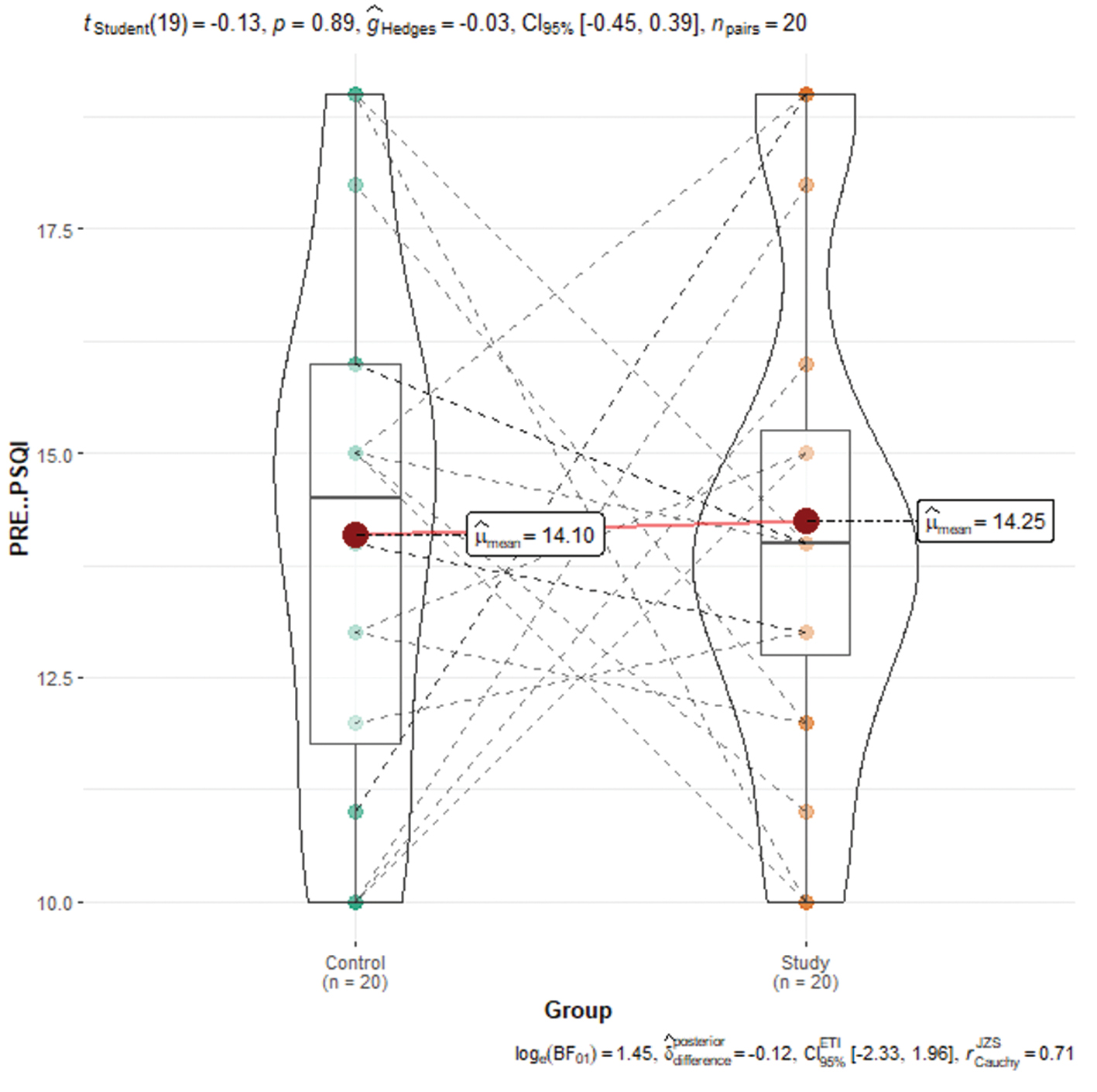
Figure 1. Baseline PSQI comparison between the groups. Violin plots showing the distribution of baseline PSQI scores for the control (n = 20) and study (n = 20) groups. PSQI = Pittsburgh Sleep Quality Index.
| International Journal of Therapeutic Massage and Bodywork (2026) 19(2), 46–52. | https://doi.org/10.3822/ijtmb.v19i2.1219 |
Deepa Yoganathan, BNYS1, Kalaivani Srinivasan2, Karunydevi Rajendran2, Priyadharshini Rajamani2, Maheshkumar Kuppusamy, BNYS, MSc, PhD3*
1Department of Manipulative Therapy, Government Yoga and Naturopathy Medical College and Hospital, Chennai, India
2Department of Yoga and Naturopathy, Government Yoga and Naturopathy Medical College and Hospital, Chennai, India
3Department of Physiology, Government Yoga and Naturopathy Medical College and Hospital, Chennai, India
Objective: To examine the impact of reflexology foot massage using aromatic oils on sleep quality in individuals with poor sleep quality.
Design: Single-blind randomized controlled trial.
Setting: Yoga and Naturopathy Medical College and Hospital.
Participants: Forty adults (20 intervention, 20 control) aged 30–60 years with poor sleep quality were recruited. Inclusion criteria included Pittsburgh Sleep Quality Index (PSQI) scores >5 indicating poor sleep quality.
Interventions: The intervention group received daily 20-min foot reflexology massage using aromatic oils for 21 consecutive days. The control group participants remained seated in a quiet room for 20 min daily, focusing on natural breathing, for 21 consecutive days.
Main outcome measures: Sleep quality was assessed using the PSQI at baseline and post-intervention (day 22).
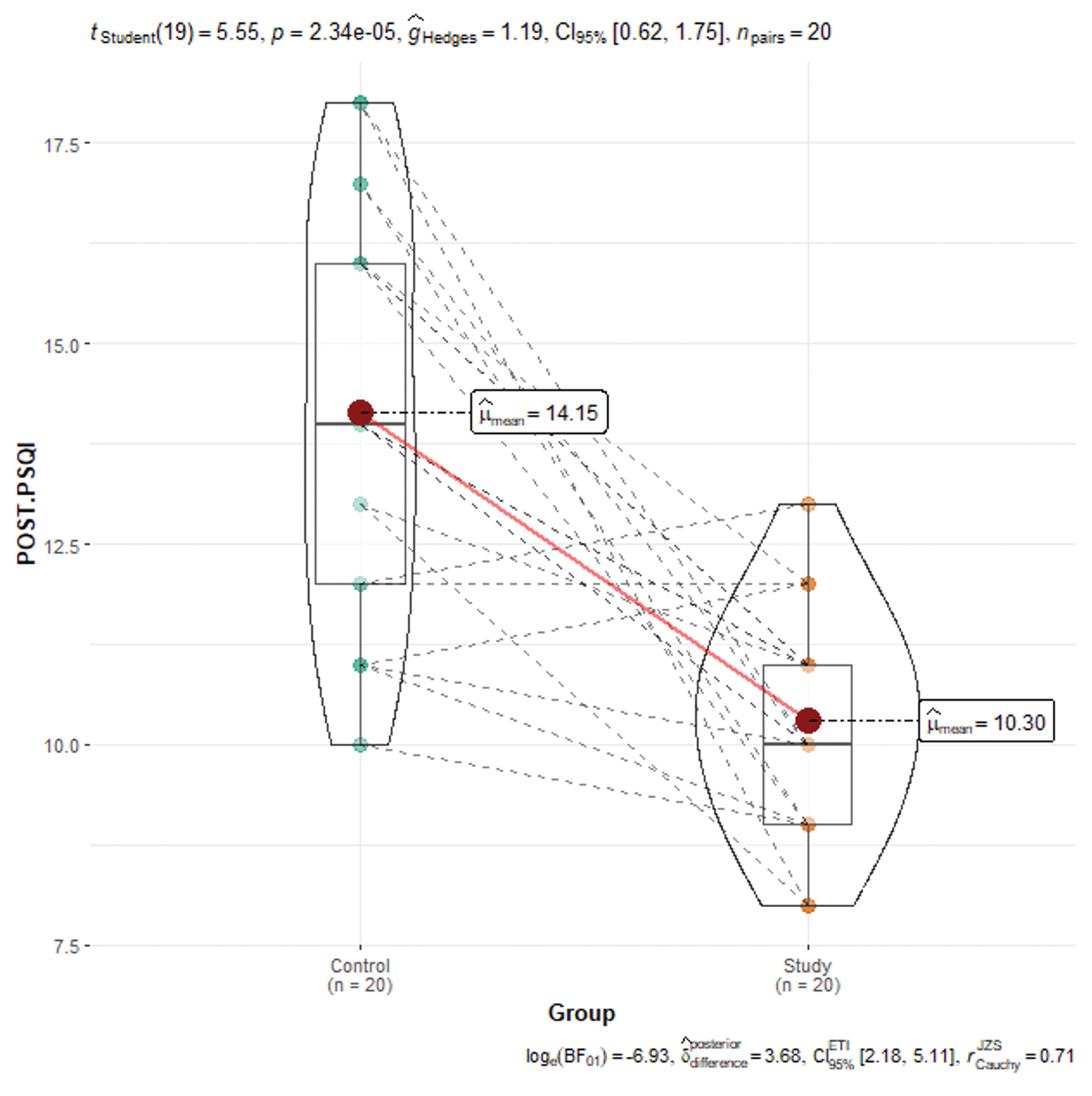
Results: Forty participants completed the study (95% female, n = 38) with a mean age of 50.30 ± 8.15 years. The intervention group showed significant improvement in PSQI scores from baseline mean 14.25 ± 2.8 to 10.30 ± 1.4 post-intervention (p < 0.001), while the control group demonstrated minimal change from baseline mean 14.10 ± 2.8 to 14.15 ± 2.6 post-intervention (p = 0.34).
Conclusions: Reflexology foot massage using aromatic oils significantly improved sleep quality in individuals with poor sleep quality. This intervention shows potential as a safe, cost-effective complementary therapy for sleep quality enhancement.
KEYWORDS: Sleep quality; foot reflexology; aromatherapy; complementary therapies; massage therapy
Sleep disorders represent one of the most prevalent health challenges worldwide, with poor sleep quality affecting millions of individuals across all age groups.(1) According to recent epidemiological studies, sleep disturbances affect 20–30% of the global population, with chronic sleep problems impacting nearly one-third of adults.(2) These sleep quality issues extend beyond nighttime difficulties, significantly affecting daytime functioning, cognitive performance, emotional regulation, and overall quality of life.(3)
The management of sleep disorders has traditionally relied heavily on pharmacological interventions.(4) However, concerns regarding side effects, dependency potential, and long-term safety have prompted both health care providers and patients to seek alternative therapeutic approaches. This shift has generated considerable interest in evidence-based complementary therapies that can provide safe, effective, and sustainable solutions for sleep quality improvement.(4)
Foot reflexology represents an ancient therapeutic practice that has gained scientific attention in recent decades.(5) This non-invasive technique involves the systematic application of pressure to specific reflex points on the feet, each corresponding to different organs and body systems. The underlying principle suggests that stimulation of these reflex points can enhance circulation, reduce tension, and promote physiological balance throughout the body.(6,7) Contemporary research has begun to validate reflexology’s therapeutic potential across various health conditions, including stress reduction and sleep enhancement.(8)
Aromatherapy, another well-established complementary therapy, utilizes the therapeutic properties of essential oils extracted from medicinal plants. These concentrated botanical compounds have demonstrated measurable effects on the nervous system, particularly in promoting relaxation and reducing stress-related symptoms.(9) Specific essential oils, including lavender, chamomile, and rosemary, have shown promising results in sleep research, with studies indicating their potential to improve sleep onset, duration, and quality.(10,11)
The combination of foot reflexology with aromatherapy presents a novel therapeutic approach that may enhance the individual benefits of each modality. While reflexology provides physical stimulation and promotes relaxation through manual techniques, aromatherapy contributes additional sensory engagement through olfactory pathways that directly influence the limbic system and sleep–wake cycles. Despite the theoretical foundation and individual evidence supporting both therapies, limited research has systematically examined their combined effects on sleep quality.(12) This randomized controlled trial was designed to address this research gap by investigating the efficacy of foot reflexology massage combined with aromatic oils in improving sleep quality among adults with poor sleep.
This single-blind randomized controlled trial was conducted at Yoga and Naturopathy Medical College and Hospital, Chennai from June to December 2024. The study protocol was approved by the institutional ethics committee, and written informed consent was obtained from all participants prior to enrollment.
Adults aged 30–60 years with poor sleep quality were recruited from the hospital outpatient department. Eligibility was determined using the Pittsburgh Sleep Quality Index (PSQI), with participants scoring >5 (indicating poor sleep quality) eligible for inclusion.
Inclusion criteria
Men and women aged 30–60 years with PSQI scores >5, willing to provide informed consent and complete the study protocol, were included in the study.
Exclusion criteria
The exclusion criteria were current use of sleep medications or other therapeutic treatments for sleep disorders; significant comorbidities affecting sleep; pregnancy or lactation; active skin infections or traumatic injuries of the feet; and inability to complete study assessments.
Participants were randomly allocated 1:1 to intervention or control groups using computer-generated randomization sequences. Allocation concealment was maintained using sequentially numbered, opaque, sealed envelopes (SNOSE technique). Due to the nature of the intervention, participants and study personnel could not be blinded to group assignment. However, outcome assessors were blinded to group allocation during data analysis.
Intervention group
Participants received daily 20-min foot reflexology massage for 21 consecutive days. The massage utilized a standardized blend of essential oils (lavender, rosemary, and chamomile in a 1:1:1 ratio) diluted to 5% concentration in sesame oil as the carrier. Each session included 10 standardized massage movements (1 min each per foot): warm-up twist, arch rubs, toe bends, foot spread, heel cup, knuckle work, thumb walk, pressure point stimulation, toe massage, and completing strokes. All treatments were administered by a trained yoga and naturopathy doctor.
Control group
Participants remained seated in a quiet room for 20 min daily, focusing on natural breathing, for 21 consecutive days.
The primary outcome was sleep quality assessed using the PSQI administered at baseline and day 22 (post-intervention). The PSQI is a validated 19-item self-report questionnaire evaluating seven components: subjective sleep quality, sleep latency, sleep duration, habitual sleep efficiency, sleep disturbances, sleep medication use, and daytime dysfunction. Each component is scored 0–3, with total scores ranging from 0 to 21; higher scores indicate poorer sleep quality.
Sample size was calculated based on anticipated mean difference in PSQI scores of 3 points between groups, with a standard deviation (SD) of 3, power of 80%, and alpha of 0.05, yielding 20 participants per group.
Data analysis was performed using R software version 4.2.3. Descriptive statistics were calculated for baseline characteristics. Between-group differences in PSQI scores were analyzed using independent t-tests. Within-group changes were assessed using paired t-tests. Statistical significance was set at p < 0.05.
The study included 40 participants with a mean age of 50.30 years (SD 8.15). The sample was predominantly female, with 38 (95%) women and 2 (5%) men. The mean height was 153.40 cm (SD 7.71), and the mean weight was 64.05 kg (SD 13.64).
At baseline, the control and study groups were similar across most characteristics (Table 1), including age (p = 0.6), sex distribution (p = 0.5), height (p = 0.3), and pre-intervention PSQI scores (p = 0.6). However, there was a significant difference in body mass index (BMI) between the groups (p = 0.032), with the study group having a higher mean BMI (29.07 vs. 24.63).
Table 1. Details of the Study Participants
| Characteristic | Overall, N = 40 | Control, n = 20 | Study, n = 20 | p-Value |
|---|---|---|---|---|
| Age, years | 50.30 ± 8.15 | 49.50 ± 8.8 | 51.10 ± 7.49 | 0.6 |
| Sex | 0.5 | |||
| Female | 38/40 (95%) | 18/20 (90%) | 20/20 (100%) | |
| Male | 2/40 (5.0%) | 2/20 (10%) | 0/20 (0%) | |
| Height, cm | 153.40 ± 7.71 | 153.85 ± 9.44 | 152.95 ± 5.70 | 0.3 |
| Weight, kg | 64.05 ± 13.64 | 60.10 ± 10.68 | 68.00 ± 15.33 | 0.12 |
| BMI | 26.85 ± 5.87 | 24.63 ± 4.17 | 29.07 ± 6.56 | 0.032 |
| Pre-PSQI | 14.58 ± 2.28 | 14.10 ± 2.8 | 14.25 ± 2.5 | 0.89 |
| Post-PSQI | 12.44 ± 2.48 | 14.15 ± 2.6 | 10.30 ± 1.42 | <0.001 |
BMI = body mass index; PSQI = Pittsburgh Sleep Quality Index.
The post-intervention PSQI scores showed a statistically significant difference between groups (p < 0.001). The study group demonstrated a more substantial reduction in PSQI scores compared to the control group (Figures 1 and 2), indicating a potentially meaningful improvement in sleep quality.
Figure 1. Baseline PSQI comparison between the groups. Violin plots showing the distribution of baseline PSQI scores for the control (n = 20) and study (n = 20) groups. PSQI = Pittsburgh Sleep Quality Index.
Figure 2. Post-intervention PSQI comparison between the groups. Violin plots showing the distribution of post-PSQI scores for the control (n = 20) and study (n = 20) groups. PSQI = Pittsburgh Sleep Quality Index.
The study demonstrated statistically significant improvements in sleep quality scores following the 21-day intervention period, contributing to the growing evidence base for non-pharmacological approaches to sleep quality enhancement. The lack of improvement in the control group confirms that sleep quality deterioration or maintenance of poor sleep patterns occurs naturally without intervention, establishing the necessity for active treatment approaches.
Our findings align closely with recent studies examining combined aromatherapy and foot massage interventions. Kang et al. (2022) investigated aroma foot massage using jojoba carrier oil and lavender oil in older adults (≥70 years) residing in nursing facilities.(13) Their study demonstrated significant improvements in sleep quality scores. While their population differed from ours (institutionalized elderly versus community-dwelling adults aged 30–60 years), both studies consistently demonstrate the efficacy of combined aromatherapy and foot massage for sleep quality improvement.
Similarly, Ünal Aslan and Altın (2022) conducted a randomized controlled trial examining the effects of combined foot massage and lavender aromatherapy in stroke patients.(14) Their three-group design (foot massage + aromatherapy, aromatherapy alone, and control) provided valuable insights into the synergistic effects of combined interventions. The study found that foot massage combined with aromatherapy was significantly more effective than foot massage alone in improving sleep quality and happiness levels, and reducing fatigue (p < 0.05). Crucially, their control group showed no significant changes in sleep quality scores, while both the active intervention groups demonstrated improvements, with the combined approach showing superior efficacy. This pattern mirrors our results and reinforces that active intervention is essential for sleep quality improvement—passive observation or expectation alone are insufficient to produce meaningful clinical changes.
While previous studies have examined aromatherapy combined with general foot massage, our study specifically employed standardized foot reflexology techniques targeting specific pressure points believed to correspond to different body systems. This approach differs from conventional foot massage by incorporating systematic pressure point stimulation based on reflexology principles. Additionally, our tri-component essential oil blend (lavender, rosemary, and chamomile in equal ratios) represents a unique formulation compared to the single lavender oil used in previous studies. The consistent findings across diverse populations (healthy adults, elderly residents, stroke patients) suggest robust underlying mechanisms. The observed improvements likely result from multiple physiological pathways: foot reflexology may activate parasympathetic nervous system responses through mechanical stimulation of peripheral nerve endings,(15) while aromatherapy compounds directly influence limbic system structures involved in sleep–wake regulation.(16) The convergent evidence from multiple studies supports the hypothesis that combined interventions produce additive or synergistic effects through these complementary mechanisms.
The 21-day intervention period, while showing immediate effects, does not address long-term sustainability. The inability to blind participants to group allocation introduces potential bias, though this limitation is shared with similar studies in this field and is inherent to manual therapy research.
Future research should include active control groups (such as general foot massage without aromatherapy) to isolate specific therapeutic components. Comparative effectiveness studies examining dose-response relationships, different intervention frequencies and durations, and various essential oil combinations would inform optimal protocol development. Multicenter trials with diverse populations and longer follow-up periods are needed to establish definitive clinical recommendations.
This study provides evidence supporting the efficacy of combined foot reflexology massage with aromatic oils for sleep quality improvement. The control group’s maintained poor sleep quality demonstrates that active intervention is necessary for clinical improvement, while the intervention group’s significant benefits establish the therapeutic value of this non-pharmacological approach. The convergent evidence strengthens the case for clinical implementation while highlighting the need for larger, longer-term studies to optimize treatment protocols.
The authors used Paperpal AI to assist with revising and formatting the final manuscript. All content was reviewed and validated by the authors.
The authors have no potential conflicts of interests with respect to the research, authorship, and/or publication of this article.
No sources of funding were used in this study.
The datasets from this study are available from the corresponding author upon reasonable request.
1. Chattu VK, Manzar MD, Kumary S, Burman D, Spence DW, Pandi-Perumal SR. The global problem of insufficient sleep and its serious public health implications. Healthcare (Basel). 2018;7(1):1. [CrossRef] [PubMed]
2. McArdle N, Ward SV, Bucks RS, Maddison K, Smith A, Huang R-C, et al. The prevalence of common sleep disorders in young adults: a descriptive population-based study. Sleep. 2020;43(10):zsaa072. [CrossRef] [PubMed]
3. Wang W, Zhu Y, Yu H, Wu C, Li T, Ji C, et al. The impact of sleep quality on emotion regulation difficulties in adolescents: a chained mediation model involving daytime dysfunction, social exclusion, and self-control. BMC Public Health. 2024;24(1):1862. [CrossRef] [PubMed]
4. Sateia MJ, Buysse DJ, Krystal AD, Neubauer DN, Heald JL. Clinical practice guideline for the pharmacologic treatment of chronic insomnia in adults: an American Academy of Sleep Medicine clinical practice guideline. J Clin Sleep Med. 2017;13(2):307–349. [CrossRef] [PubMed]
5. Deenadayalan B, Venugopal V, Poornima R, Kannan VM, Akila A, Yogapriya C, et al. Effect of foot reflexology on patients with multiple sclerosis: a systematic review of current evidence. Int J MS Care. 2024;26(2):43–48. [CrossRef] [PubMed]
6. Venugopal V, Yogapriya C, Deenadayalan B, Akila A, Poonguzhali S, Poornima R, et al. Foot reflexology for reduction of blood pressure in hypertensive individual: a systematic review. Foot (Edinb). 2023;54:101974. [CrossRef] [PubMed]
7. Cai D-C, Chen C-Y, Lo T-Y. Foot reflexology: recent research trends and prospects. Healthcare. 2023;11(1):9. [CrossRef] [PubMed]
8. Huang HC, Chen KH, Kuo SF, Chen IH. Can foot reflexology be a complementary therapy for sleep disturbances? Evidence appraisal through a meta-analysis of randomized controlled trials. J Adv Nurs. 2021;77(4):1683–1697. [CrossRef] [PubMed]
9. Boopalan D, Venugopal V, Ravi P, Kuppusamy M. Aromatherapy improves olfactory acuity and sexual dysfunction in postmenopausal women. J Family Reprod Health. 2023;17(2):116–117. [CrossRef] [PubMed]
10. Stevens N, Dorsett J, DaBell A, Eggett DL, Han X, Parker TL. Subjective assessment of the effects of an herbal supplement containing lavender essential oil on sleep quality: a randomized, double-blind, placebo-controlled crossover study. Cogent Med. 2017;4(1):1380871. [CrossRef]
11. Yeom JW, Cho C-H. Herbal and natural supplements for improving sleep: a literature review. Psychiatry Investig. 2024;21(8):810–821. [CrossRef] [PubMed]
12. Chan NY, Chan JWY, Li SX, Wing YK. Non-pharmacological approaches for management of insomnia. Neurotherapeutics. 2021;18(1):32–43. [CrossRef] [PubMed]
13. Kang JI, Lee EH, Kim HY. Effects of aroma foot massage on sleep quality and constipation relief among the older adults living in residential nursing facilities. Int J Environ Res Public Health. 2022;19(9):5567. [CrossRef] [PubMed]
14. Ünal Aslan KS, Altın S. Aromatherapy and foot massage on happiness, sleep quality, and fatigue levels in patients with stroke: a randomized controlled trial. Eur J Integr Med. 2022;54:102164. [CrossRef]
15. Whatley J, Perkins J, Samuel C. Reflexology: exploring the mechanism of action. Complement Ther Clin Pract. 2022;48:101606. [CrossRef] [PubMed]
16. Ren Y-L, Chu W-W, Yang X-W, Xin L, Gao J-X, Yan G-Z, et al. Lavender improves sleep through olfactory perception and GABAergic neurons of the central amygdala. J Ethnopharmacol. 2025;337:118942. [CrossRef] [PubMed]
Corresponding author: Dr. Maheshkumar Kuppusamy, Department of Physiology, Government Yoga and Naturopathy Medical College and Hospital, Chennai 600106, India. E-mail: doctor.mahesh1985@gmail.com Tel: +91 98884591739
COPYRIGHT
Published under the CreativeCommons Attribution-NonCommercial-NoDerivs 3.0 License.
International Journal of Therapeutic Massage and Bodywork, Volume 19, Number 2, June 2026